
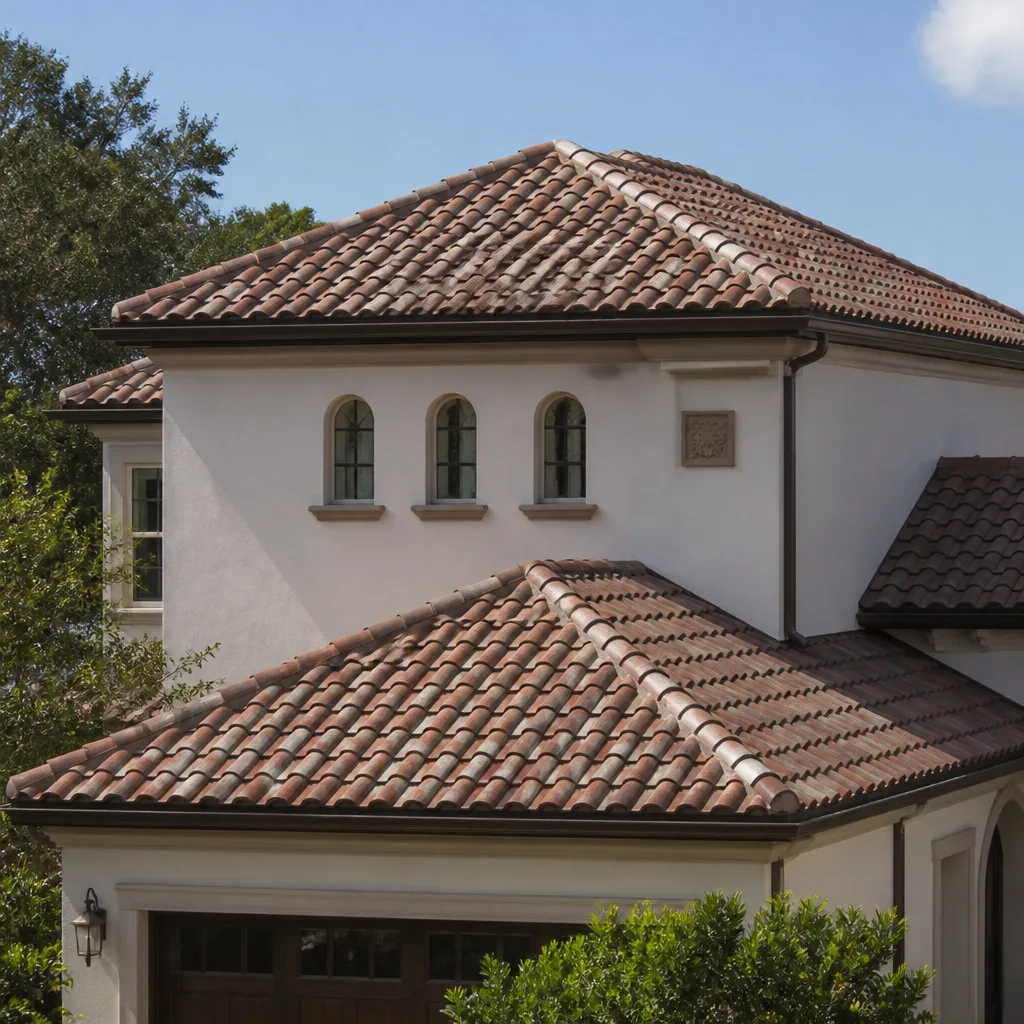
 Tile roofing
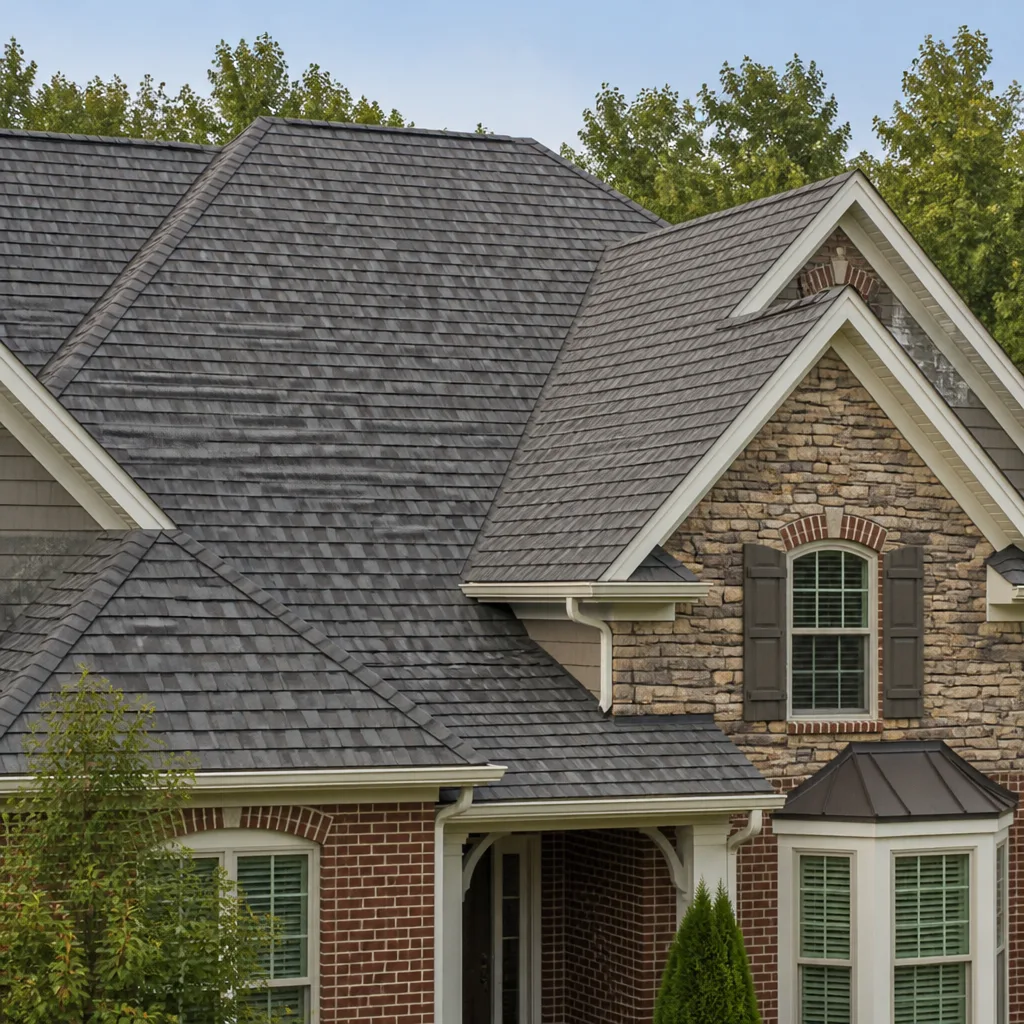 Architectural shingles
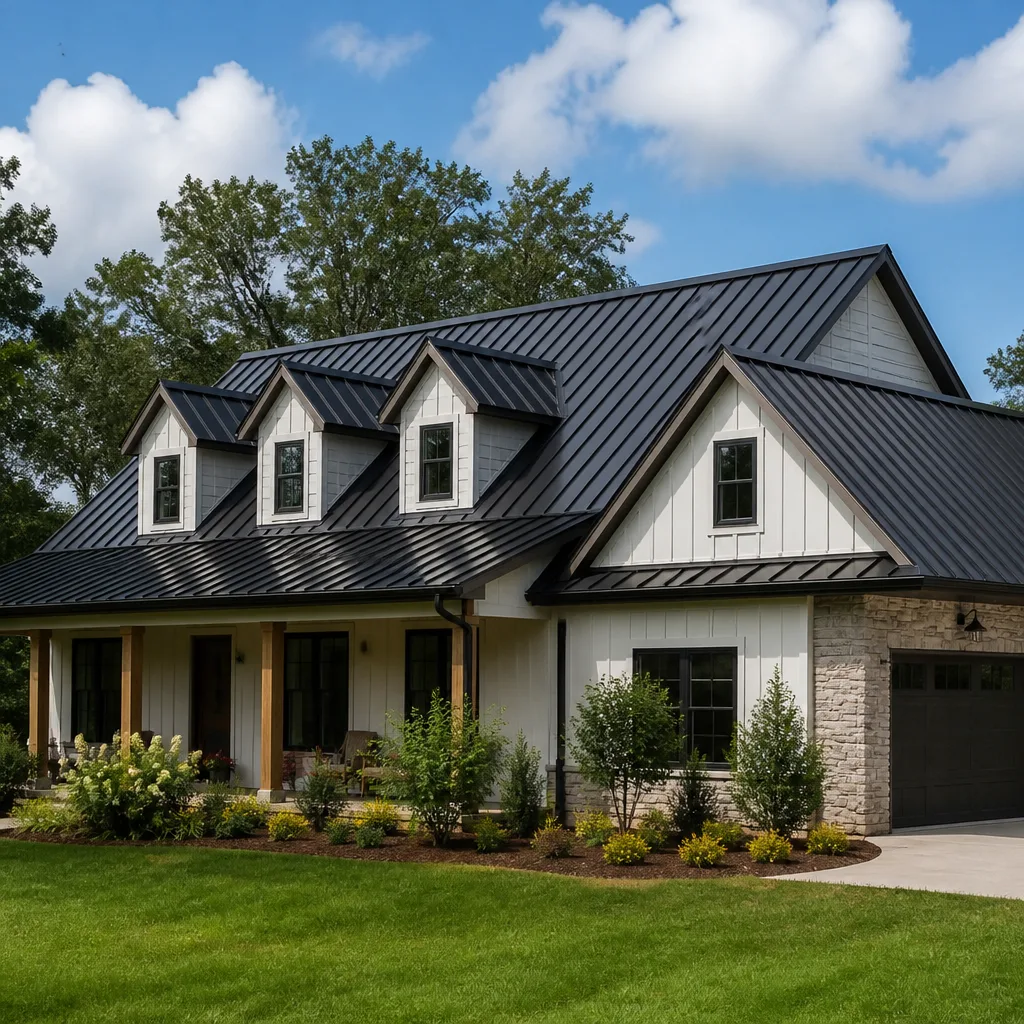 Metal roofing
 GAF
GAF Owens Corning
 Flat & low-slope
Free roof inspection with deck photos before we talk money - GAF and Owens Corning certified installation
GAF Flashing Replacement: The San Jose Owner’s Guide
GAF flashing replacement in San Jose typically runs $350 to $900 installed, depending on how much flashing needs to come out and whether the surrounding shingles or underlayment are compromised. We stock GAF-compatible flashing on our trucks, and in most cases we can complete the swap the same day we diagnose it. The way homeowners usually find us is simple: a brown stain on the ceiling, a drip during the first real rain of October, or a roofer who pointed at the flashing during an inspection and said “that’s your leak.”
Flashing is the metal or membrane material that seals the joints where your roof changes direction or meets something else, like a chimney, a wall, a skylight, or a vent pipe. When it fails on a GAF roof, it’s rarely the shingles. It’s almost always the transition points, and that’s exactly what we replace.
Which GAF Models This Applies To
GAF flashing replacement covers the full range of GAF residential roofing systems: Timberline HDZ and Ultra HDZ shingles, Timberline UHD, Royal Sovereign, and the GAF Glacier and TPO membrane lines used on low-slope sections common in San Jose’s mid-century ranches. The flashing itself isn’t a “GAF shingle part” in the way a ridge cap is. What matters is compatibility with the roof system’s underlayment and sealant chemistry, and we match those to the GAF system already on your roof.
Here’s the compatibility gotcha most homeowners hit: GAF’s newer HDZ shingle lines use a wider nailing strip and a slightly different sealant activation temperature than older GAF lines. If you’re replacing flashing on a roof with Timberline HDZ installed after 2020, the underlayment at the flashing points needs to be GAF Deck-Armor or an approved equivalent, not generic felt, or the sealant won’t bond the same way in San Jose’s hot summer months. We check the shingle wrapper date and the underlayment layer before we quote, because pulling flashing without knowing what’s underneath is how you get a repair that leaks again in six months.
For the OEM-versus-aftermarket decision: GAF manufacturers its own flashing accessories through the GAF QuickFlash and StormMaster lines, and we use those when the roof is under an active GAF warranty that requires OEM parts. When the roof is older and the warranty has aged out, a quality aftermarket galvanized or aluminum flashing matched to the same gauge and profile performs just as well and usually saves $40 to $80 per penetration. We’ll tell you which applies to your roof and why, in writing, before anything gets ordered.
Styles & brands we work with
Signs Your GAF Flashing Replacement Is Failing
- Water staining on the ceiling near a chimney or wall line. This is the classic flashing failure signature. The leak isn’t in the middle of the roof; it’s where the roof plane meets something vertical, and the flashing there has pulled away or corroded through.
- Lifted or curled flashing metal you can see from the ground. San Jose’s summer heat expands metal, and the winter’s cooler temps contract it. After enough of those cycles, step flashing nails pop and the metal lifts just enough to let water run underneath.
- Granules from your shingles collecting in gutters near roof transitions. When flashing fails, water gets under the shingle edges at the transition and accelerates granule loss. You’ll see heavier-than-normal grit in the gutter directly below a chimney or wall junction.
- Rust streaks or white corrosion on exposed flashing. Galvanized flashing has a finite lifespan in San Jose’s coastal-adjacent air, and once the zinc layer is gone, the steel underneath starts going fast. Rust streaks down the roof face are the visible tell.
- Damp attic insulation near vent pipes or skylights in the rainy season. Pipe boot flashing, the rubber collar around vent stacks, cracks and shrinks over time. In San Jose’s dry summers the crack opens up, and in the wet season water finds it immediately.
Replacement Cost & What’s Included
For most San Jose homes, expect to pay $350 to $900 for GAF flashing replacement, with the final number driven by three things: how many penetrations need new flashing, whether the surrounding shingles must be lifted or replaced to access the flashing, and whether the underlying decking or underlayment shows water damage once we open things up. A single pipe boot replacement runs $180 to $300. A full chimney flashing replacement, which means cutting new counterflashing into the mortar and installing step flashing up both sides, typically runs $600 to $900.
Every quote includes the flashing material, new sealant rated for the GAF system’s chemistry, removal and disposal of the failed flashing, and a written guarantee on the work. You’ll see the line-item breakdown before we start, and the price we hand you is the price you pay. No change orders because we “found something” once the shingles came up. If we find hidden damage, we show you a photo, explain what it means, and get your written approval before touching it.
See the difference
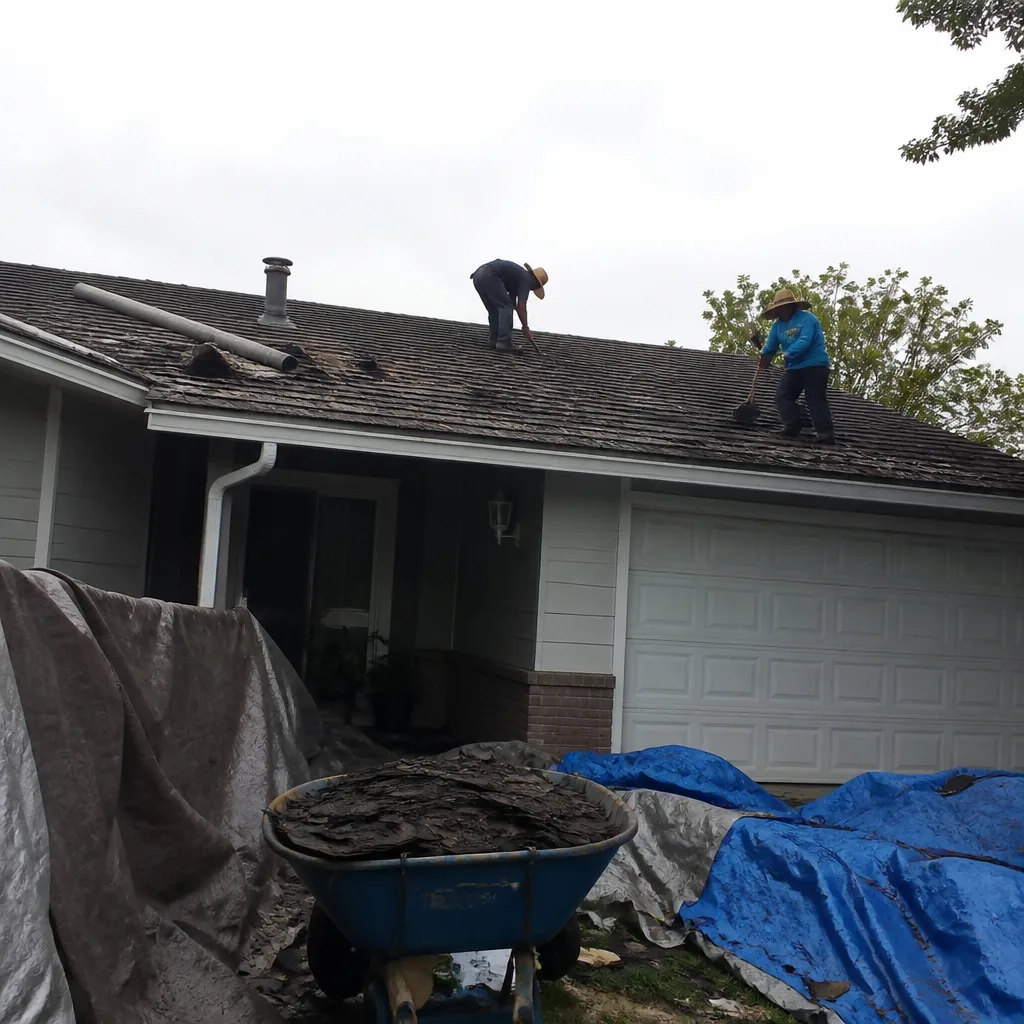 Before
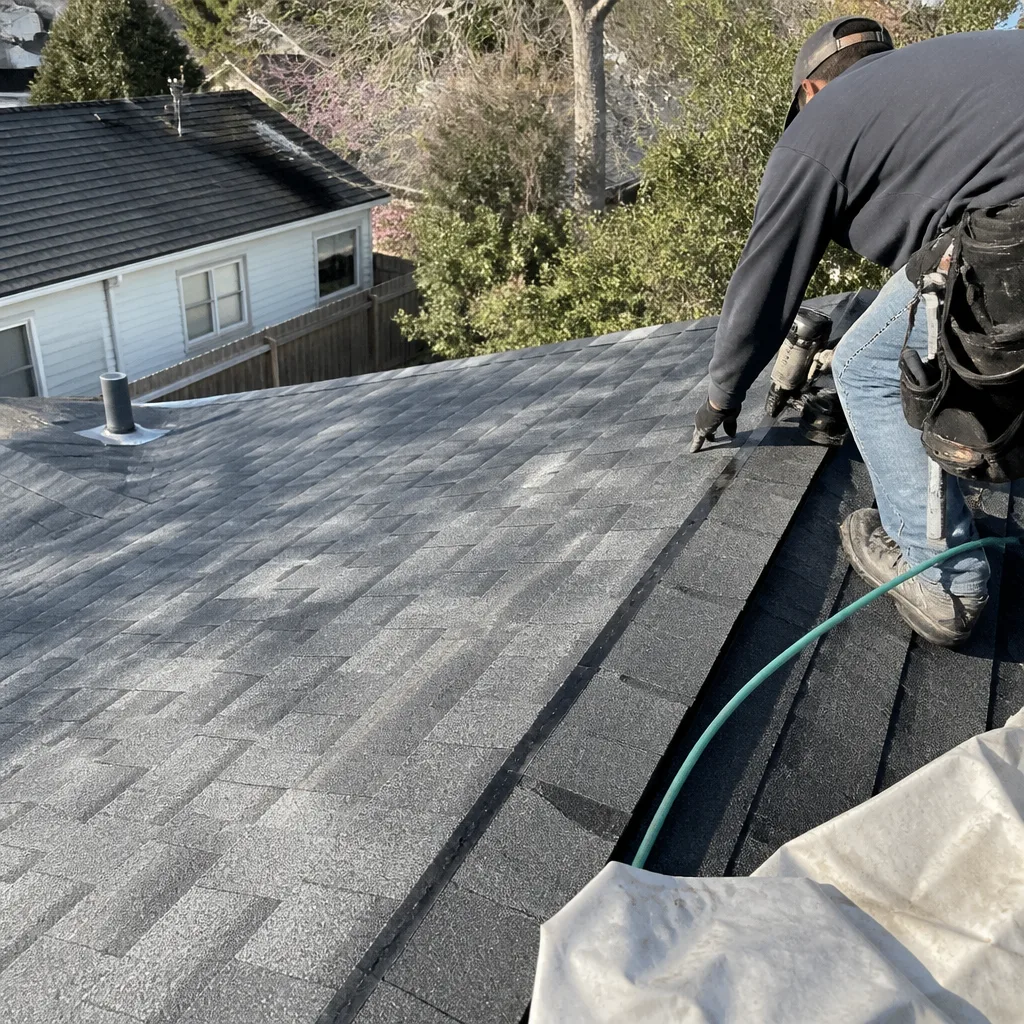 After
After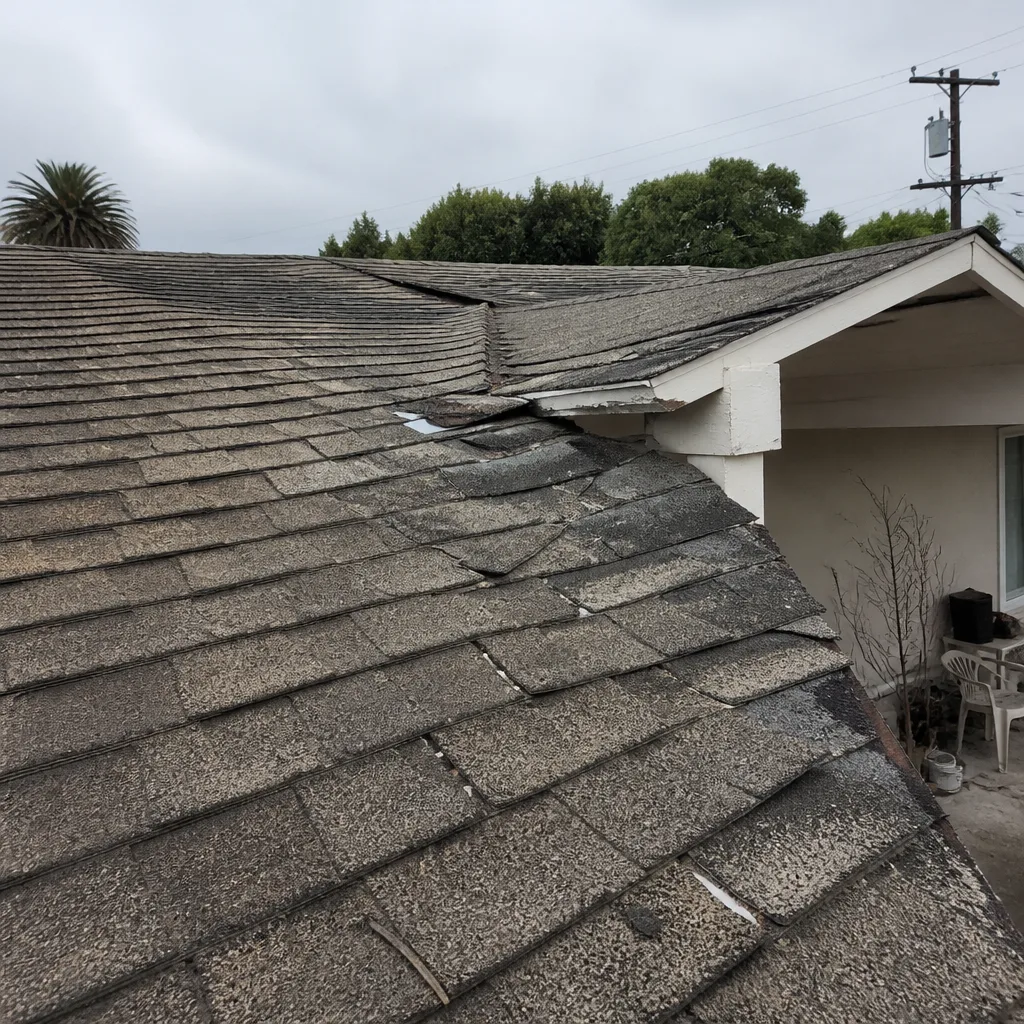 Before
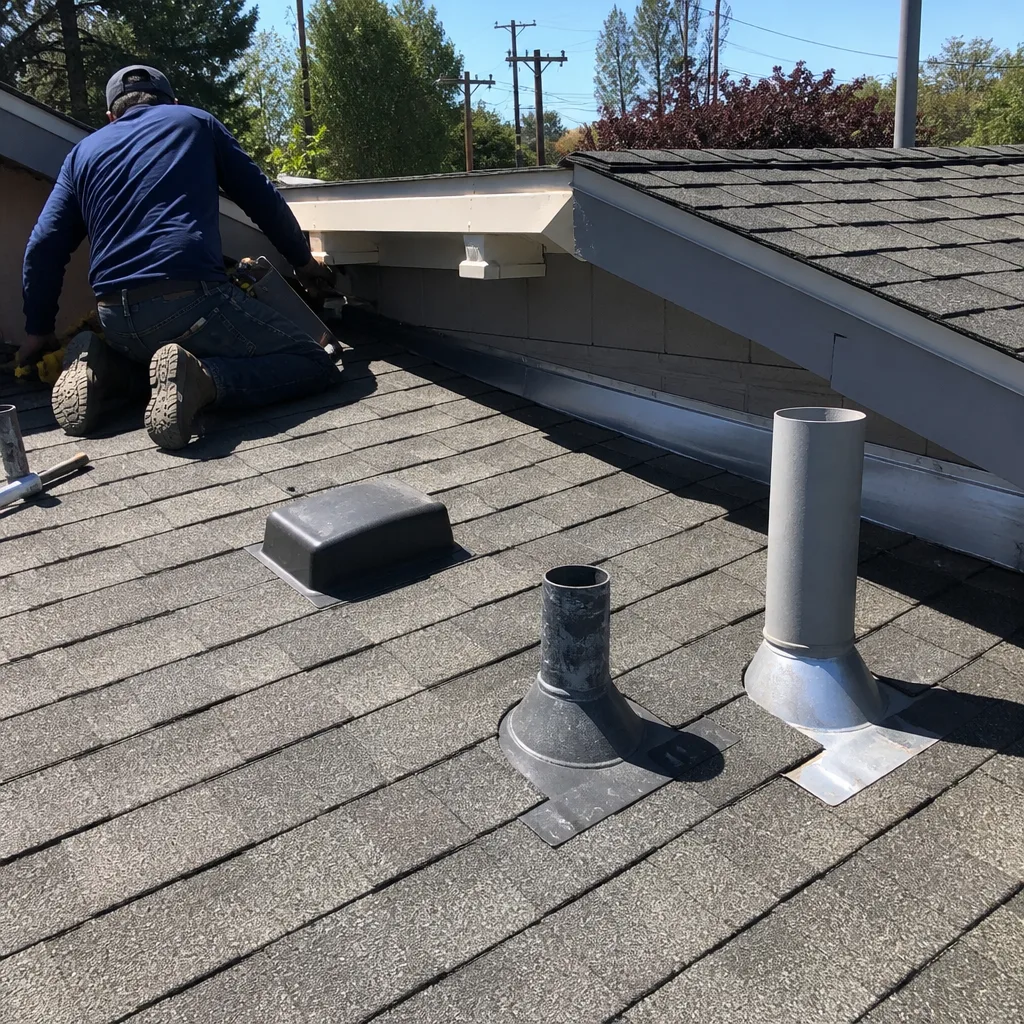 After
After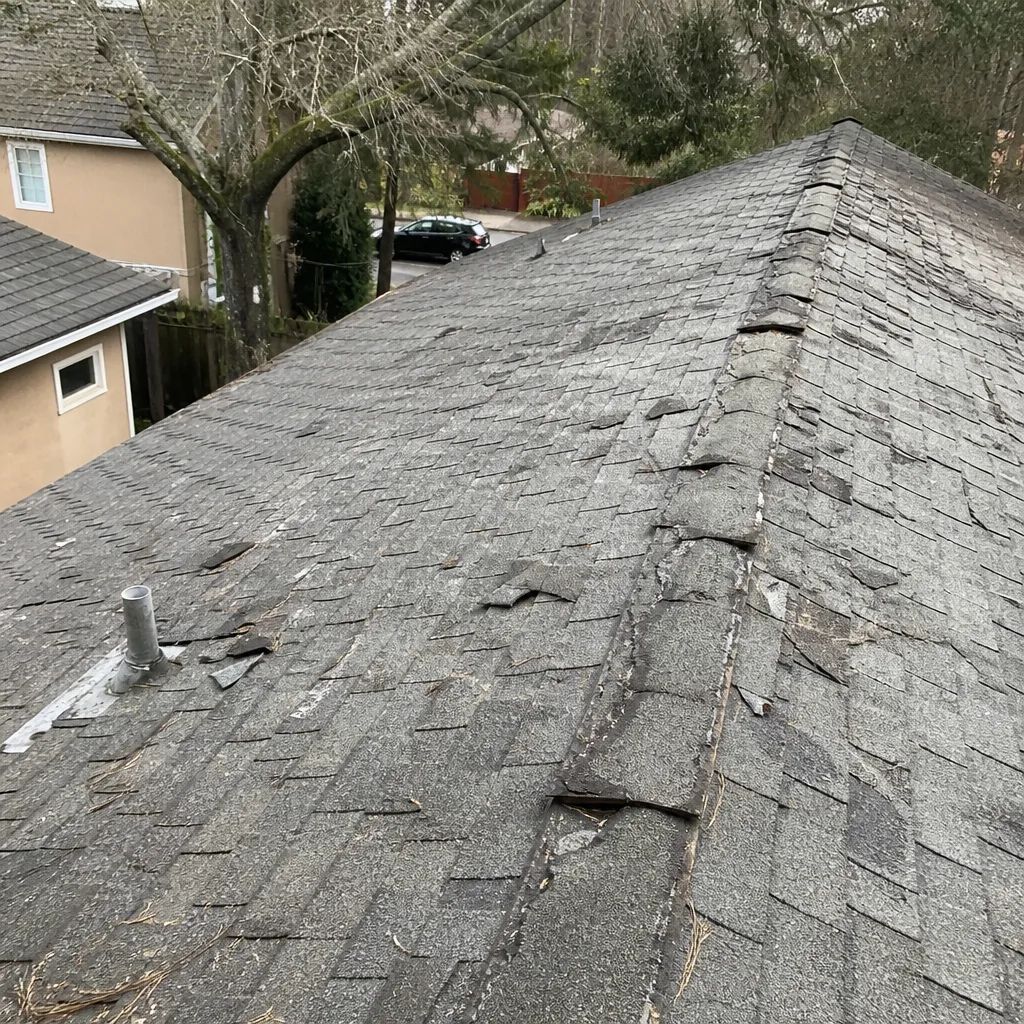 Before
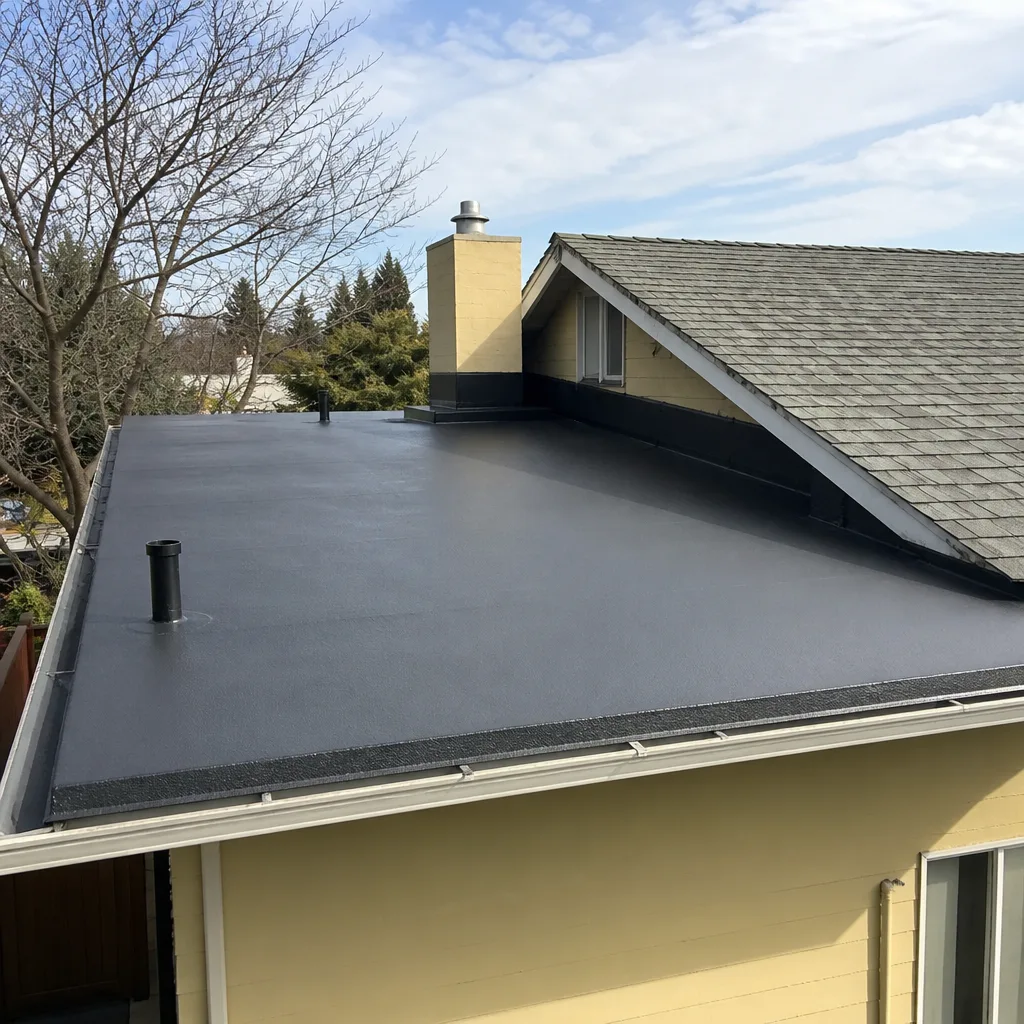 After
AfterDIY or Call Us?
You can safely check a few things from the ground or a ladder: visible rust on flashing, lifted edges, cracked rubber around vent pipes, and staining on the ceiling inside. Those observations help you describe the problem when you call, and they help us bring the right flashing to the first visit.
What I don’t recommend is pulling shingles and replacing step flashing yourself, even on a single-story San Jose ranch. The work means breaking the sealant bond on GAF shingles that are meant to stay bonded, and if you don’t re-seat everything to the manufacturer’s spec, you’ve turned a $400 repair into a $1,200 repair plus water damage. We’re on ladders and roofs every week, and even for our crews, flashing replacement is detail work, not speed work. If you’d rather we handle it, call (669) 274-0078 and we’ll get you a written estimate
FAQs
Galvanized flashing in San Jose’s climate typically lasts 15 to 25 years before corrosion or sealant failure makes replacement necessary. Homes closer to the bay or with older galvanized flashing will trend toward the shorter end of that range, while newer aluminum or membrane flashing can go longer.
Small sealant gaps around a pipe boot or a single lifted step flashing piece can sometimes be resealed or renailed as a short-term fix, but once flashing has corroded through or pulled away from a wall or chimney, patching rarely holds through a full San Jose rainy season. We’ll tell you if a repair is viable, and we’ll put that in writing.
Most single-penetration flashing replacements, like a pipe boot or a skylight edge, take two to three hours. A full chimney or wall flashing replacement usually takes four to six hours, depending on access and how much shingle lifting is required. We’ll give you a time window before we start and stick to it.
We stock GAF-compatible flashing for the most common San Jose roof configurations on our trucks, including pipe boots, step flashing, and valley flashing. For specialized GAF accessories or membrane-system flashing, we order from our local supplier with next-day availability in most cases. We also stock parts compatible with Owens Corning and CertainTeed systems, so we can match what’s already on your roof.
Call Tilehurst Roofing San Jose for GAF Flashing Replacement
If your GAF roof is leaking at a transition point, or you’ve had a flashing repair that didn’t hold, call Greg Holloway and the Tilehurst Roofing San Jose crew at (669) 274-0078. You’ll get a straight answer about what’s on your roof, what it needs, and what it costs, before any work starts. Our estimate is free, it’s in writing, and it comes with the 365-Day Done Right Promise: if it’s not right, we make it right. Phone lines are answered by a live person, 24/7, not a voicemail box.
Written by Greg Holloway, Owner, Tilehurst Roofing San Jose at Tilehurst Roofing San Jose, serving San Jose and nearby areas.