
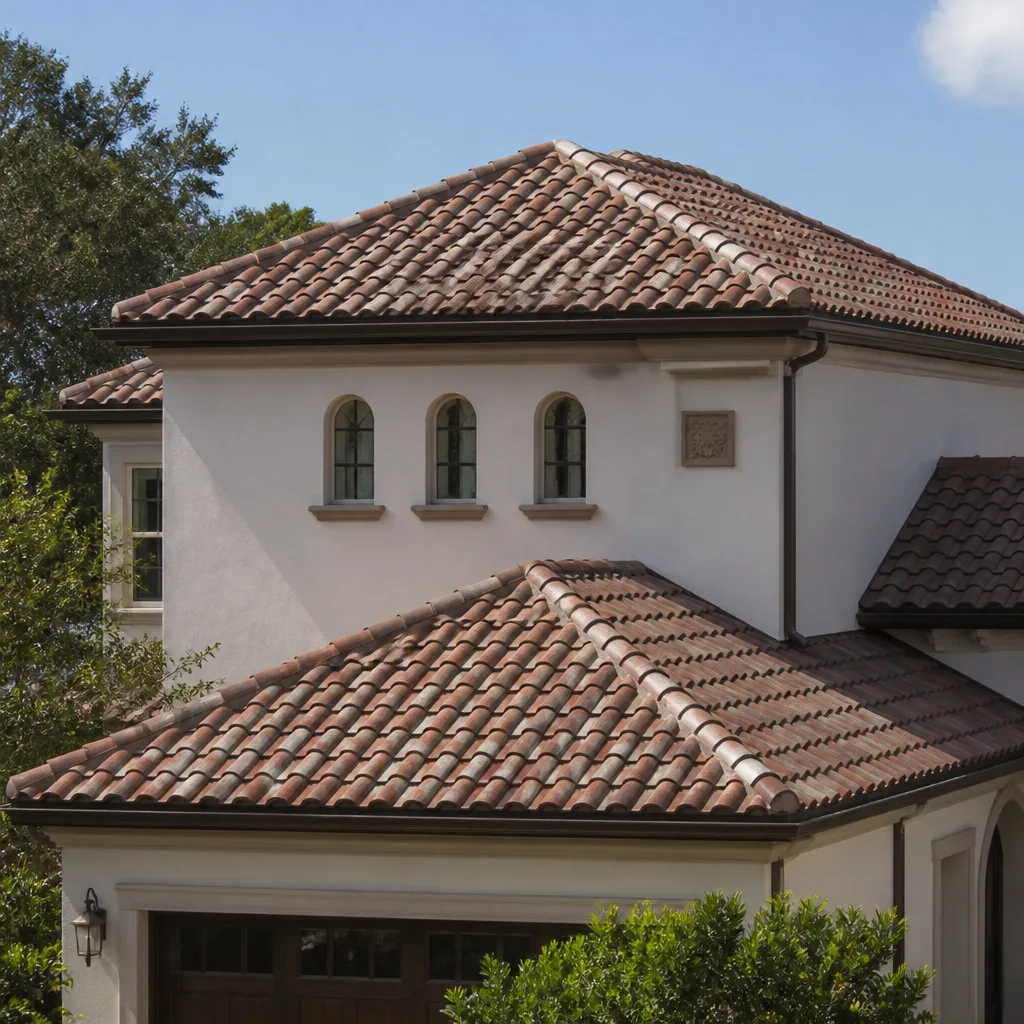
 Tile roofing
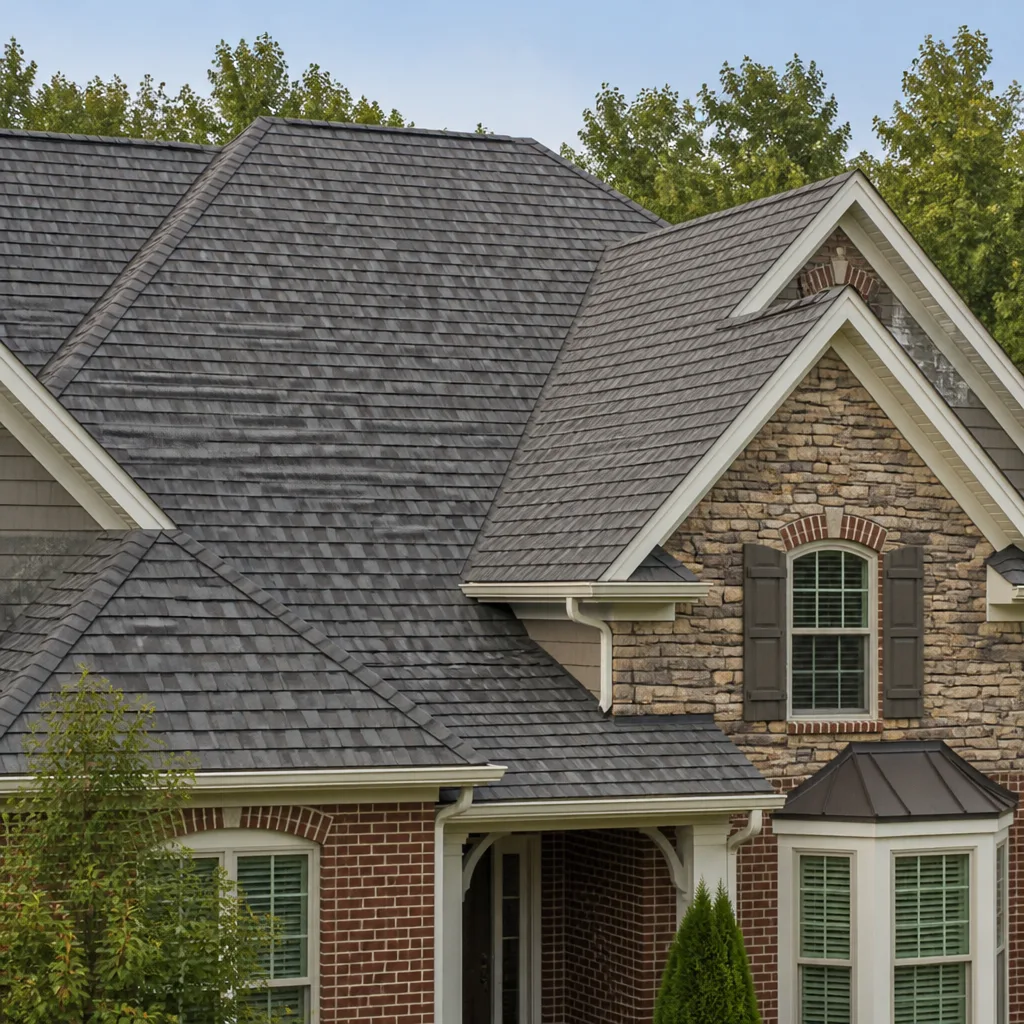 Architectural shingles
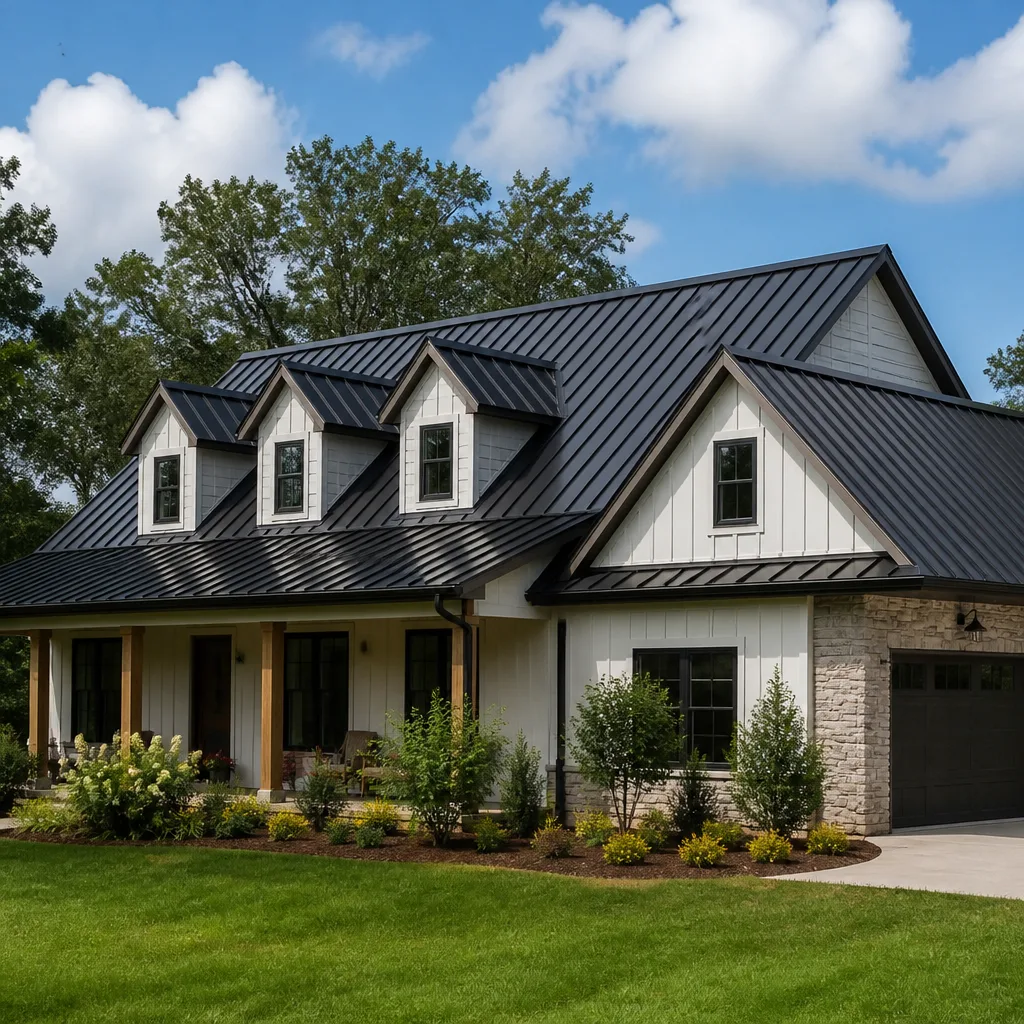 Metal roofing
 GAF
GAF Owens Corning
 Flat & low-slope
Free roof inspection with deck photos before we talk money - GAF and Owens Corning certified installation
CertainTeed Ridge Vent Installation: The San Jose Owner’s Guide
We stock and install CertainTeed-compatible ridge vent on a regular basis across San Jose, and a full ridge vent replacement on a typical single-family home here runs $850 to $1,400 installed, depending on the linear footage of your ridge and the condition of the existing cap shingles. Most jobs take one day, and we carry the common CertainTeed profiles on our trucks, so we can usually quote and complete the work in a single visit. The usual way San Jose homeowners discover they have a problem is either a roof leak near the peak of the house after a storm, or a roofer pointing it out during an unrelated repair.
If your CertainTeed ridge vent has cracked plastic baffles, missing end caps, or sections that have lifted off the roof, the fix is rarely patching it. It’s replacing it with the right profile matched to your roof. Greg Holloway and our crew have done enough of these replacements in San Jose neighborhoods from Willow Glen to Almaden Valley to know exactly what fails and what it takes to make it right.
Which CertainTeed Models This Applies To
CertainTeed makes several ridge vent lines, and the part that fits one roof won’t always fit another. The three you’ll most often find on San Jose homes are the ShingleVent II (the most common, with a fabric-filtered baffle and a 9-inch top width), the ShingleVent II Filtered, and the Mountain Ridge (lower profile, designed for architectural shingle blends). Each uses a different baffle shape, and the ShingleVent II is often installed with CertainTeed’s matching hip and ridge cap shingles, which changes how the top layer seats.
If you’re not sure which one you have, look at the end of the vent where it meets the roof edge. The ShingleVent II has a visible raised rib pattern in the plastic, and the Mountain Ridge sits noticeably flatter against the roof deck. You can also measure the top width before the cap shingles cover it. In our experience, most San Jose homes built in the last 20 years with CertainTeed shingles are running ShingleVent II.
On the OEM versus aftermarket question: we can install aftermarket ridge vent that matches CertainTeed specs on most roofs, but when the warranty on your CertainTeed shingle system is still active, we recommend staying with the CertainTeed vent. Mismatching the vent profile with cap shingles that were designed around a specific vent is one of the most common causes of early failure we see on San Jose re-roofs.
Styles & brands we work with
Signs Your CertainTeed Ridge Vent Installation Is Failing
Ridge vent failure is rarely dramatic. It’s usually a slow breakdown that shows up in ways that are easy to dismiss until a roof leak makes it obvious. Here are the five signs we see most often on San Jose roofs:
- Water stains on the ceiling near an interior wall or the peak of a room. This usually means the cap shingles over the vent have lifted or cracked, letting rain get under the top layer and follow the roof framing down.
- Daylight visible from the attic at the ridge line. You should see the baffle, not open sky. If you can see light streaming through, the vent baffle has shifted or broken and wildlife or rain can get in.
- Granules from the cap shingles collecting in your gutters. Ridge cap shingles take more UV exposure than field shingles because they sit at the highest, most exposed line of the roof. When they start shedding granules heavily, the vent beneath them is usually close behind.
- Cracked or brittle plastic visible at the vent ends. San Jose’s dry, hot summers bake the plastic baffle material over time. Once the end caps crack, the vent starts pulling away from the roof deck at the corners.
- Birds, rodents, or insect activity in the attic. Ridge vents with failed baffles or missing end caps are a common entry point. If you hear scratching in the attic, the ridge vent is one of the first places we check.
See the difference
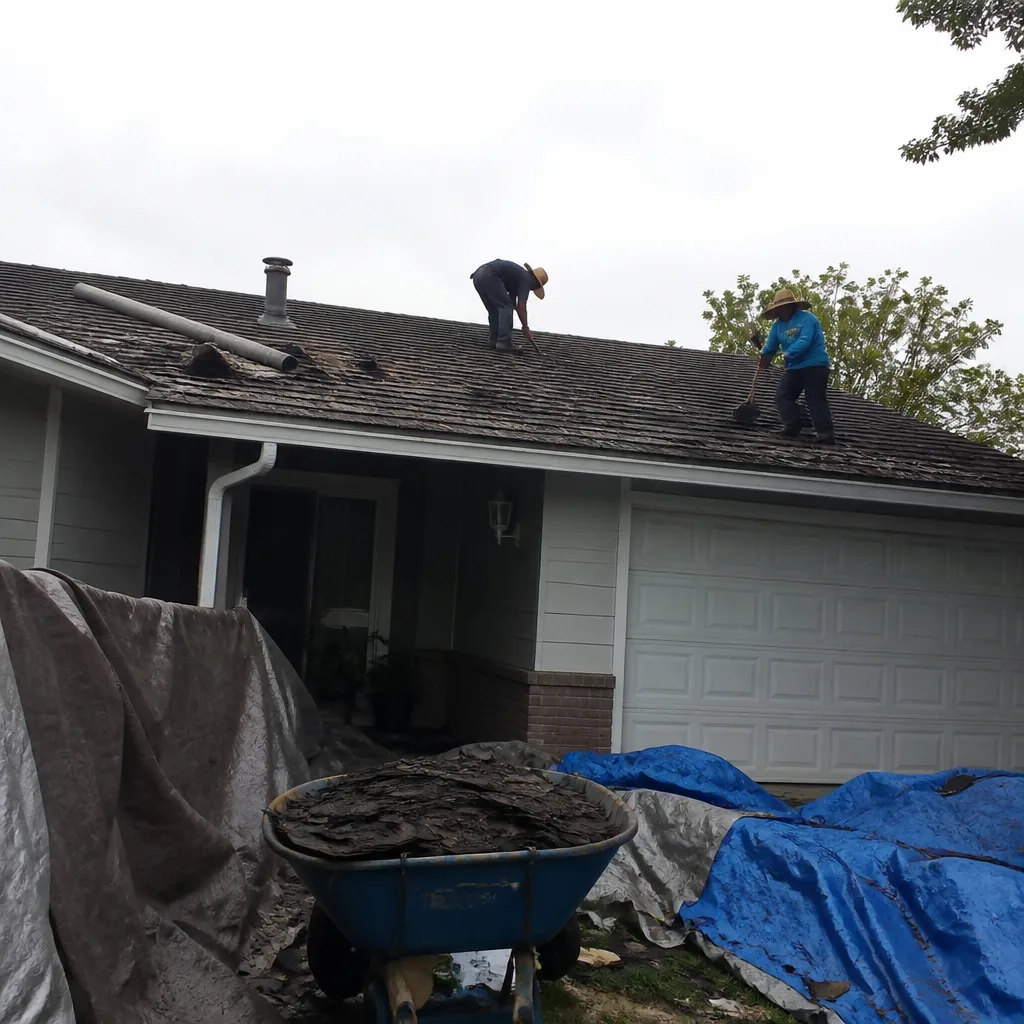 Before
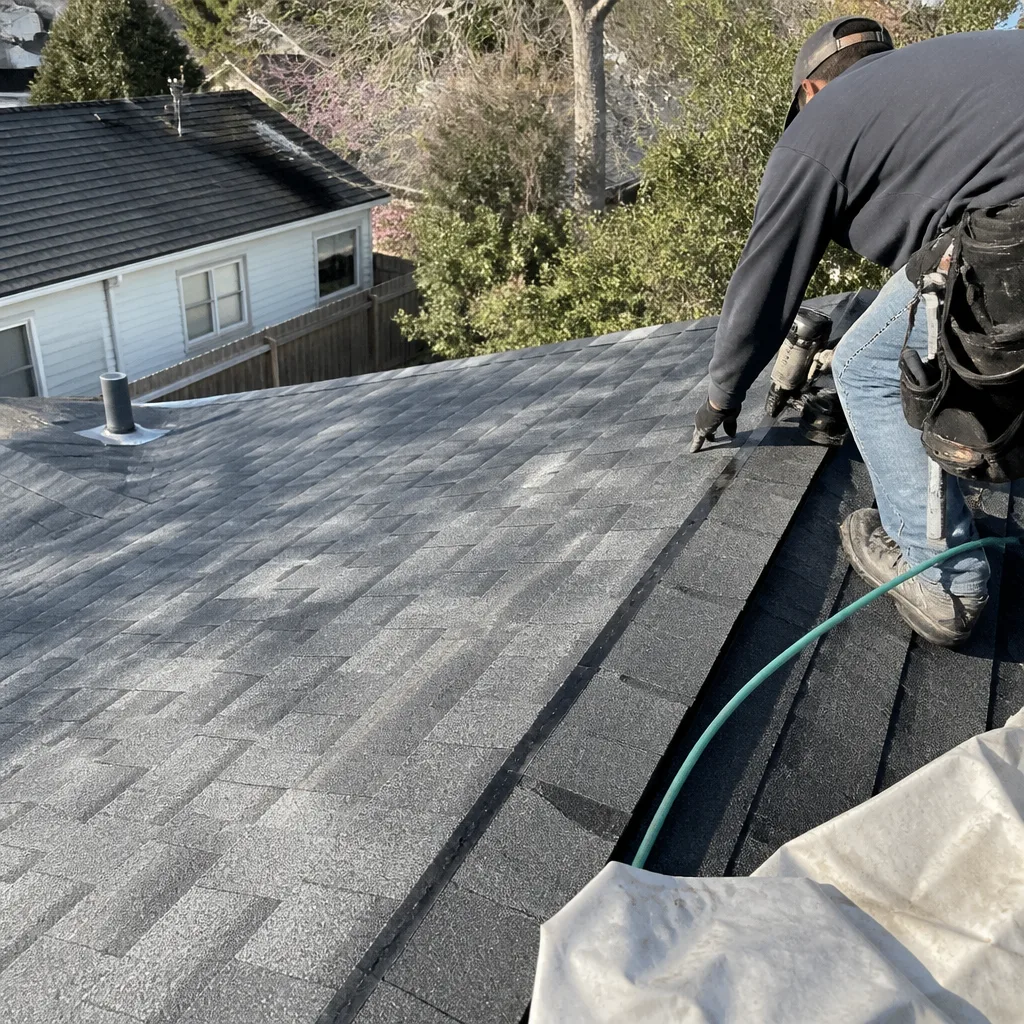 After
After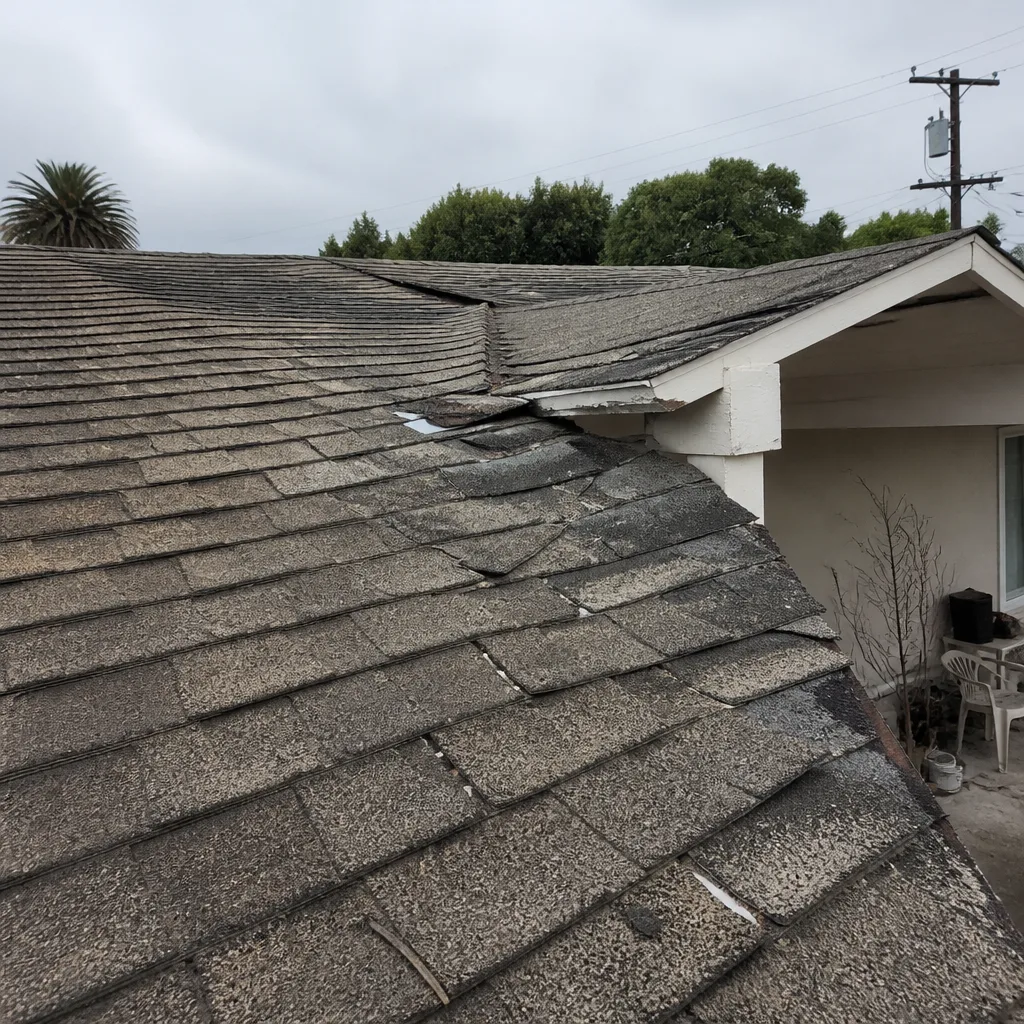 Before
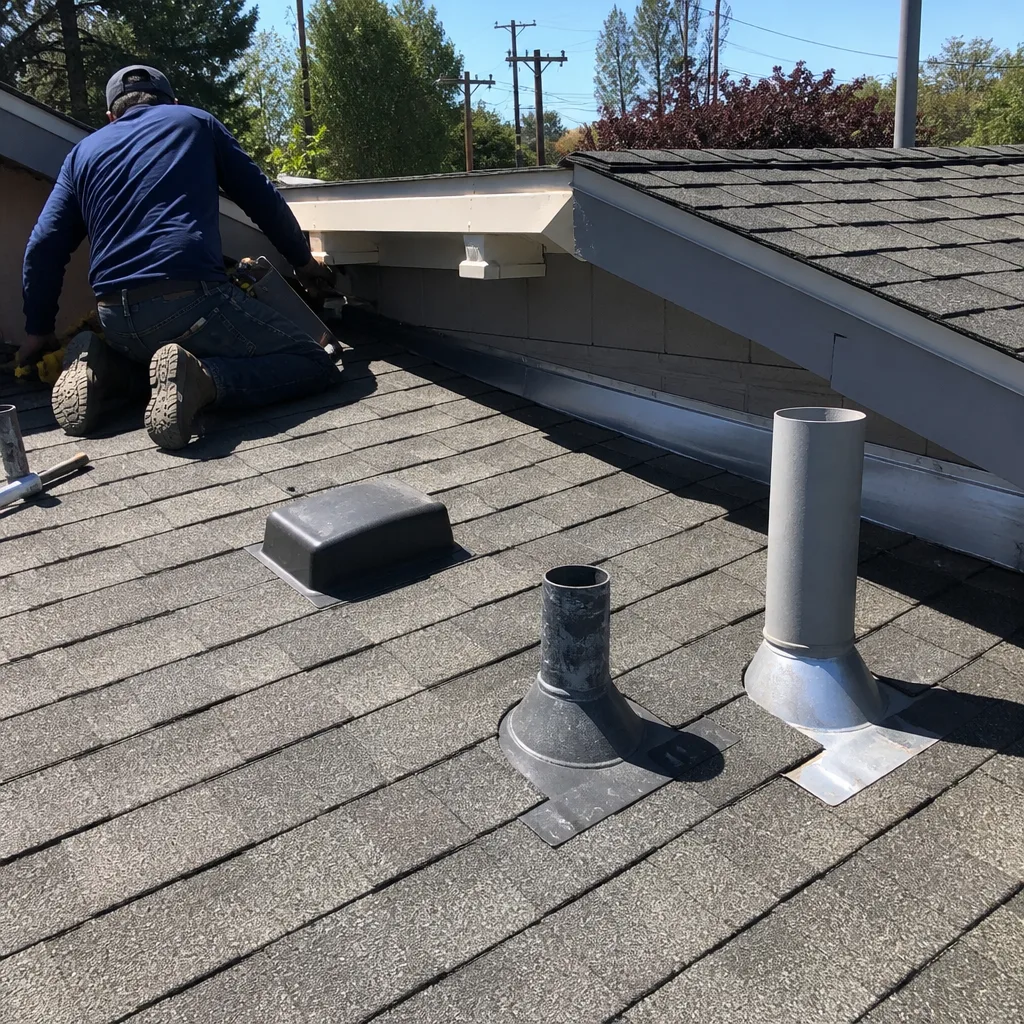 After
After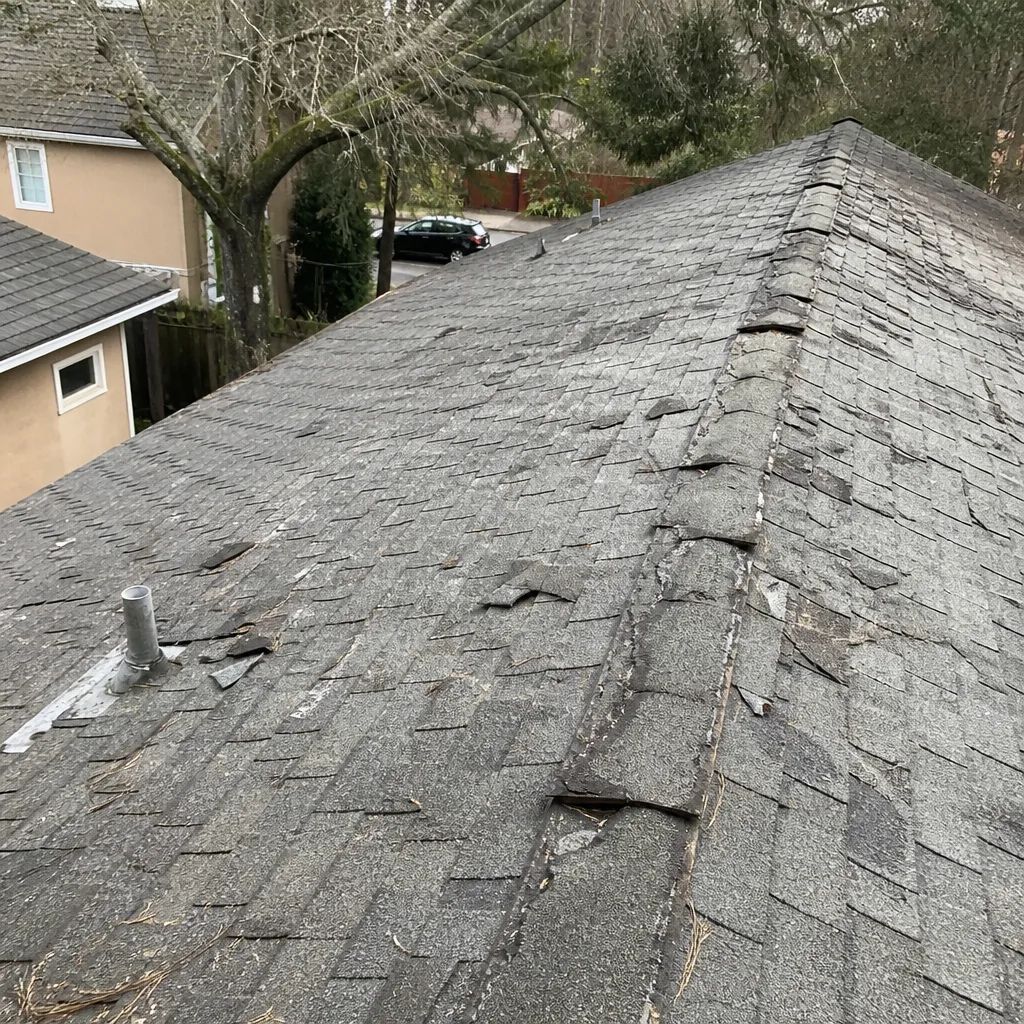 Before
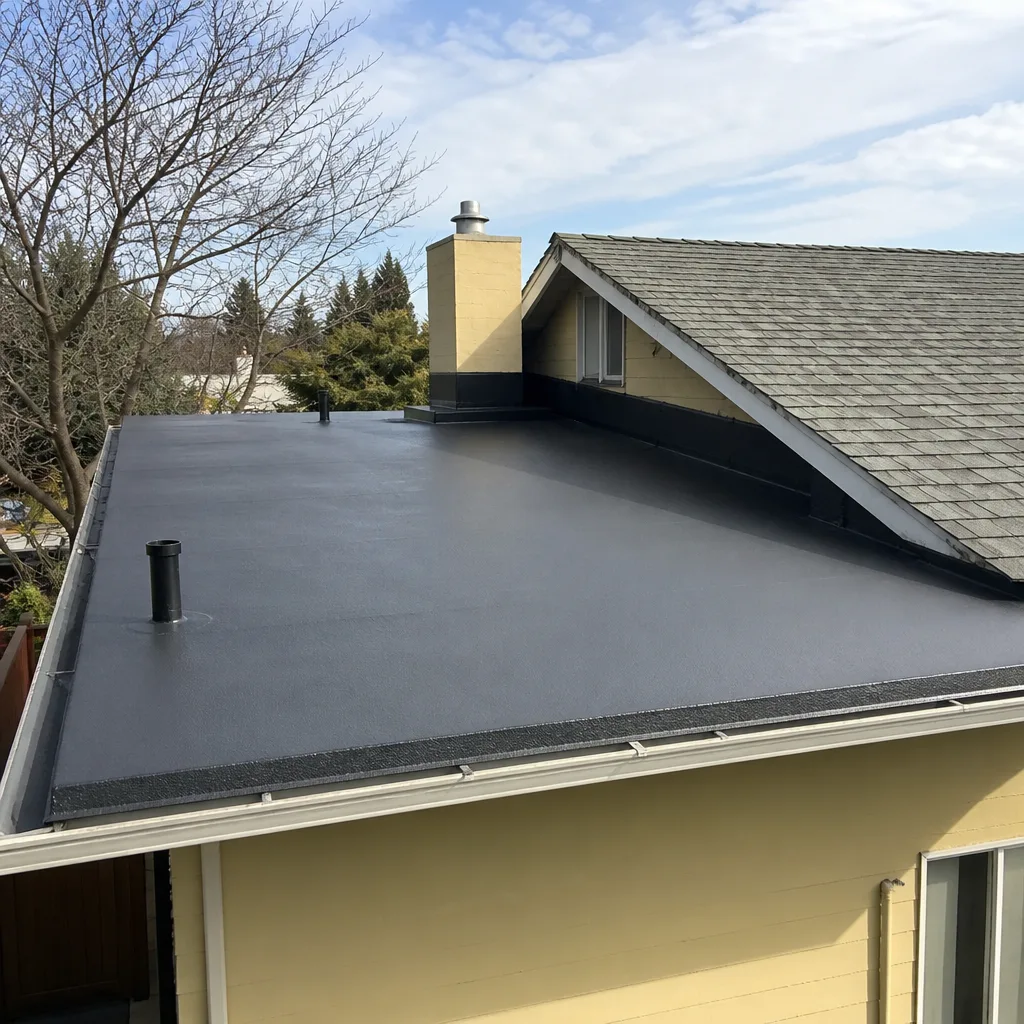 After
AfterReplacement Cost & What’s Included
For a full CertainTeed ridge vent replacement in San Jose, you’re looking at $850 to $1,400 for most homes, and the price breaks down into three parts: removing the old vent and cap shingles, installing the new vent with the right baffle profile and fasteners, and capping it with new ridge cap shingles that match your roof’s existing color profile. The main driver of price is linear feet of ridge. A simple ranch home with 40 feet of ridge is at the bottom of that range; a two-story home with a cut-up roofline and a second ridge line is at the top.
Every quote we write is a fixed, written price before any work starts. That includes the removal, the new vent, the new cap shingles, the fasteners, and the cleanup. What you won’t see is a change order at the end because the old vent wouldn’t come off cleanly or the decking needed a few nails. If we find rotted decking at the ridge line while the old vent is off, we’ll stop, show you the spot, and give you a separate written price for the decking repair before we touch it. You’re never obligated to move forward that day.
Our workmanship warranty on ridge vent replacement is in writing and delivered before the crew leaves. If the repair fails inside the guarantee period, we come back and make it right at no charge under our 365-Day Done Right Promise.
DIY or Call Us?
Walking a roof to inspect a ridge vent from the outside is the one step we’d say an owner can do safely, and only if the pitch is shallow and you’re comfortable on a ladder. From the attic side, you can check for daylight at the ridge and look for water staining on the roof sheathing. Those two checks will tell you whether you have a problem.
What we don’t recommend is replacing ridge vent yourself. It means working at the highest line of the roof, pulling cap shingles, cutting away the old vent, and fastening the new one straight along the ridge peak. One misstep there is a very long fall, and the work is also the boundary between your roof and your attic space. If the vent is installed off-center or the fasteners miss the rafters, you’ve created a path for water that won’t show itself until it’s rotted the sheathing. Greg has spent the better part of two decades on San Jose roofs, and even our experienced crew treats ridge work with extra care. Call (669) 274-0078 if you’re seeing any of the warning signs. We’ll come out, look at the vent, and give you a straight answer and a written price.
FAQs
A properly installed CertainTeed ridge vent should last 15 to 20 years in San Jose’s climate, but the plastic baffle often fails before the cap shingles do because of our long, hot summers. If your roof is over 15 years old and the vent is original, it’s worth having it checked when you’re ready for your next re-roof. Call (669) 274-0078 and we’ll take a look.
In most cases, no. Once the baffle plastic is cracked or the vent has lifted from the roof deck, replacing the damaged section is the only repair that actually stops water and prevents animal entry. We can sometimes replace just the end caps if that’s the only damage, but partial repairs on ridge vent rarely hold in San Jose’s summer heat.
Most ridge vent replacements on a single-family San Jose home take one day. The crew removes the old cap shingles and vent, installs the new vent, caps it, and cleans up before we leave. Larger or cut-up roofs may run into a second day, and we’ll tell you exactly what to expect in your written quote.
We stock the common CertainTeed ShingleVent II profiles on our trucks, along with compatible options from GAF and Owens Corning if your home or warranty calls for something different. That usually means we can complete the work in one visit without waiting on a supplier order.
Written by Greg Holloway, Owner, Tilehurst Roofing San Jose at Tilehurst Roofing San Jose, serving San Jose and nearby areas.