
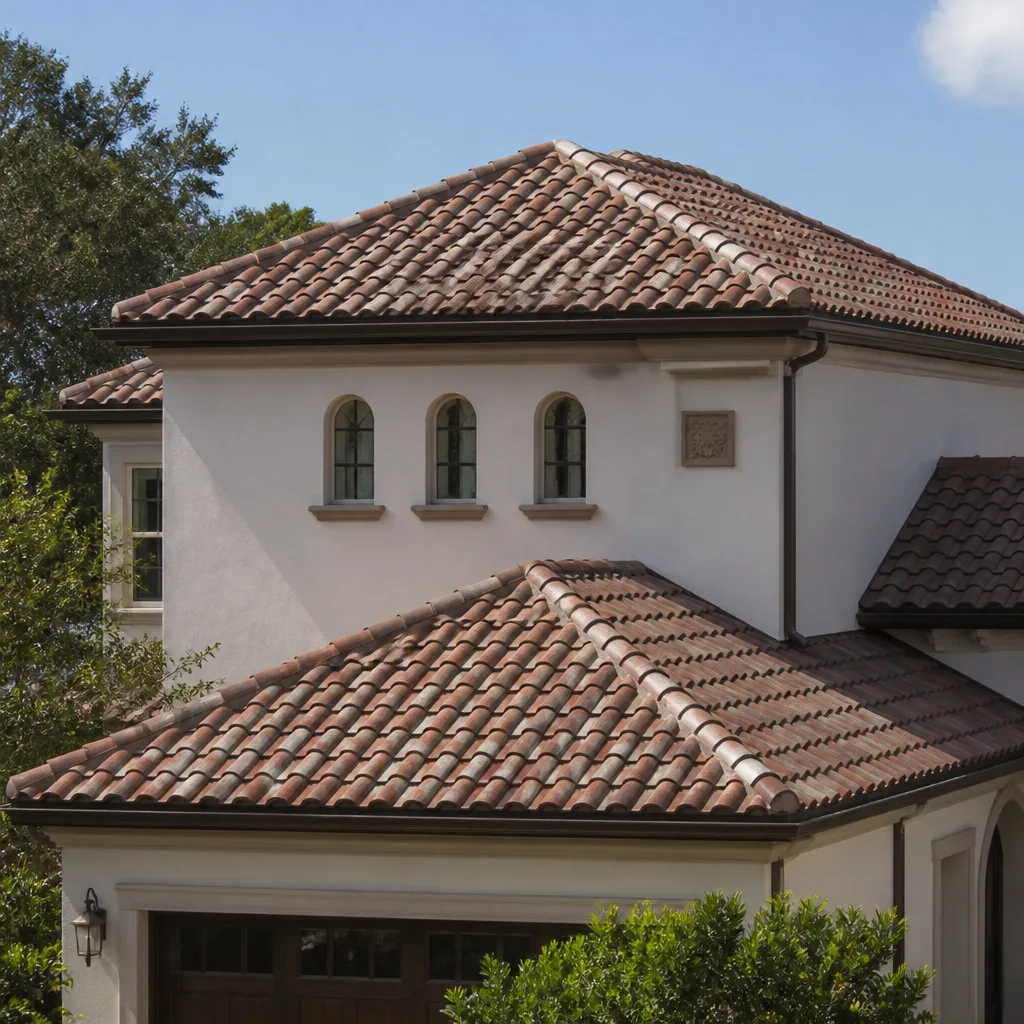
 Tile roofing
 Architectural shingles
 Metal roofing
 GAF
GAF Owens Corning
 Flat & low-slope
Free roof inspection with deck photos before we talk money - GAF and Owens Corning certified installation
Boral Flashing Replacement: The San Jose Owner’s Guide
Boral flashing replacement in San Jose typically runs $350 to $900 installed, depending on the roof’s pitch, how many linear feet of flashing need to come out, and whether the underlayment beneath it has also failed. Most jobs take our crew half a day, and we stock Boral-compatible flashing profiles on the truck for the common tile profiles you’ll find across San Jose roofs. Owners usually discover a flashing problem exactly how you’d expect: a water stain appears on a ceiling after the first real rain in November, or granules and dark streaks show up where the wall meets the roofline.
Here’s the pattern we see constantly in San Jose. A Boral tile roof from the late 1990s or early 2000s starts showing its age at the transitions first: where the tile meets a chimney, a skylight, a sidewall, or a valley. The tile itself might have another decade or two left. The flashing underneath it does not. That’s because flashing is almost always a thinner metal, usually galvanized steel or aluminum, that carries the entire job of moving water off those seams. When it fails, the tile looks fine and the leak looks like a mystery. It isn’t. It’s the metal under the tile doing what metal eventually does in the South Bay’s hot, dry summers and wet winters.
Which Boral Models This Applies To
This applies to every Boral roof profile sold in the U.S., but the three we see most often in San Jose are the Barcelona, the Villa, and the Classic flat tile profiles. The flashing profiles differ slightly between them, because the tile’s contour determines how the step flashing needs to be shaped. The Barcelona profile has a deeper flute than the Classic, which means generic step flashing from a big-box store leaves gaps that water can drive into during a wind-blown rain. That’s the compatibility gotcha; the part number on the flashing should reference the tile profile it was cut for, and many big-box flashing options don’t.
That said, you don’t necessarily need Boral-branded flashing. Boral doesn’t manufacture its own flashing metal, and the aftermarket flashing we install is cut and bent to match the specific Boral profile on your roof. What matters is the gauge, the width, and the profile match. We stock .024-gauge aluminum and 26-gauge galvanized steel flashings, both cut for the Barcelona and Villa profiles, because that covers the majority of Boral tile roofs in San Jose built from the mid-1990s through the early 2010s. If you have a less common profile or a custom bend, we order that metal pre-cut from the supplier and have it the next day.
Styles & brands we work with
Signs Your Boral Flashing Replacement Is Failing
- Ceiling stains near a chimney or wall corner after rain. Water rides the flashing seam until it hits a nail hole, a rust spot, or a broken seal, then travels. By the time it shows up on your ceiling, the flashing has usually been failing for a season.
- Rusted or curled flashing visible at the roofline. Walk the ground around your house with binoculars. If the metal at the wall or chimney transition looks brown, pitted, or lifting, that’s a direct failure sign, not a watch-and-wait.
- Loose tiles near the flashing. When flashing corrodes, it can’t hold the tile snug against the wall or penetration. Tiles that never moved before start shifting, and the gap becomes the entry point.
- Milky white corrosion on the flashing metal. That’s aluminum doing what aluminum does when water sits on it in the presence of lime and dust. It means the metal is thinning, and the next heavy rain is the one that finds the pinhole.
- Water in the attic after wind-driven rain, not steady rain. A small flashing gap closes in a calm rain and opens when the wind pushes water sideways. That scattershot leak is a flashing signature, and waiting one more rainy season only costs you drywall on top of the flashing.
See the difference
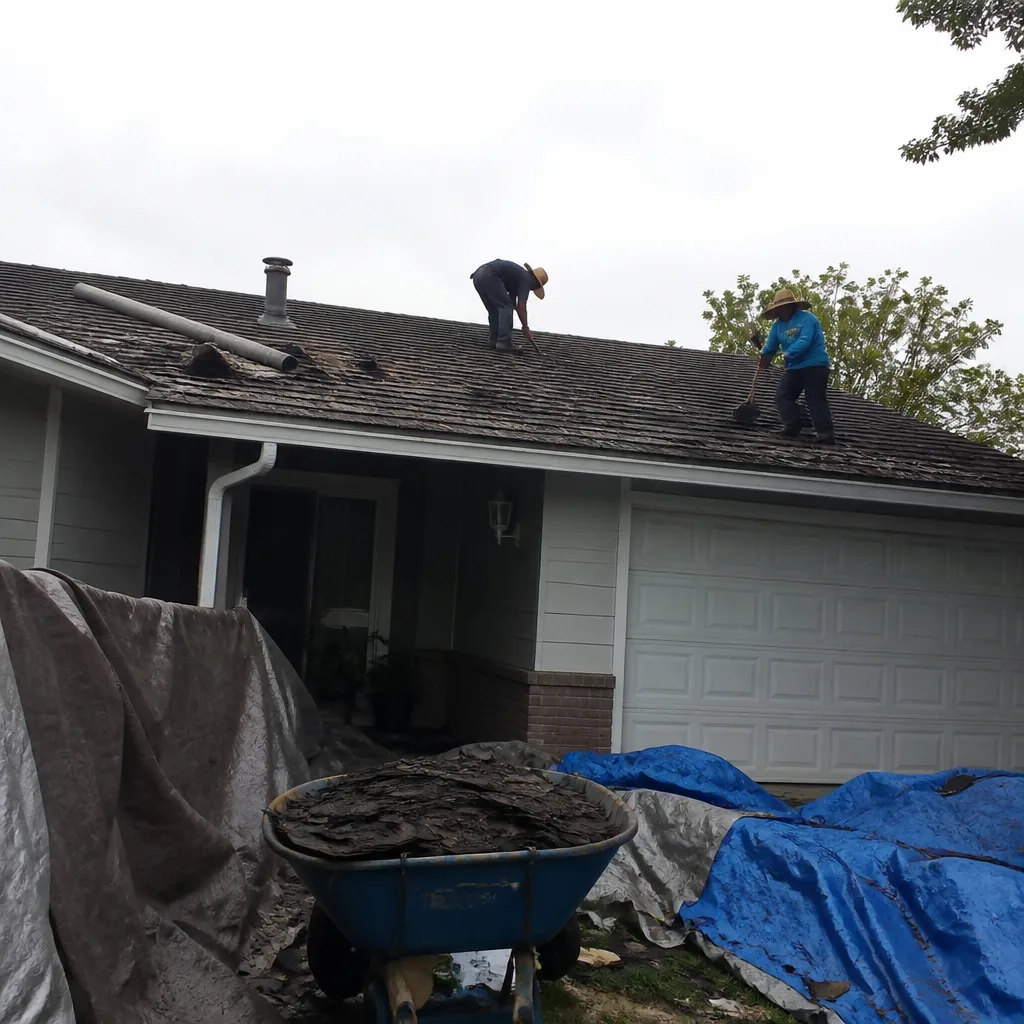 Before
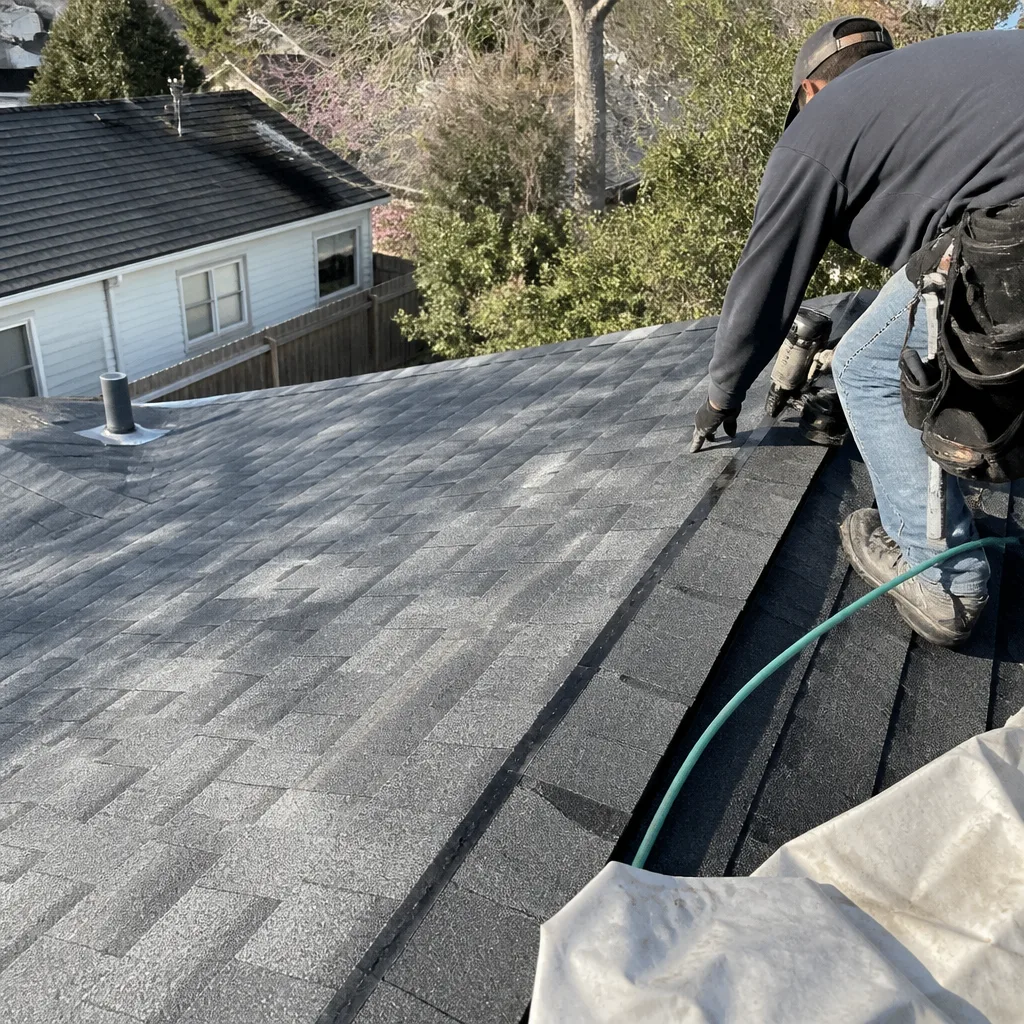 After
After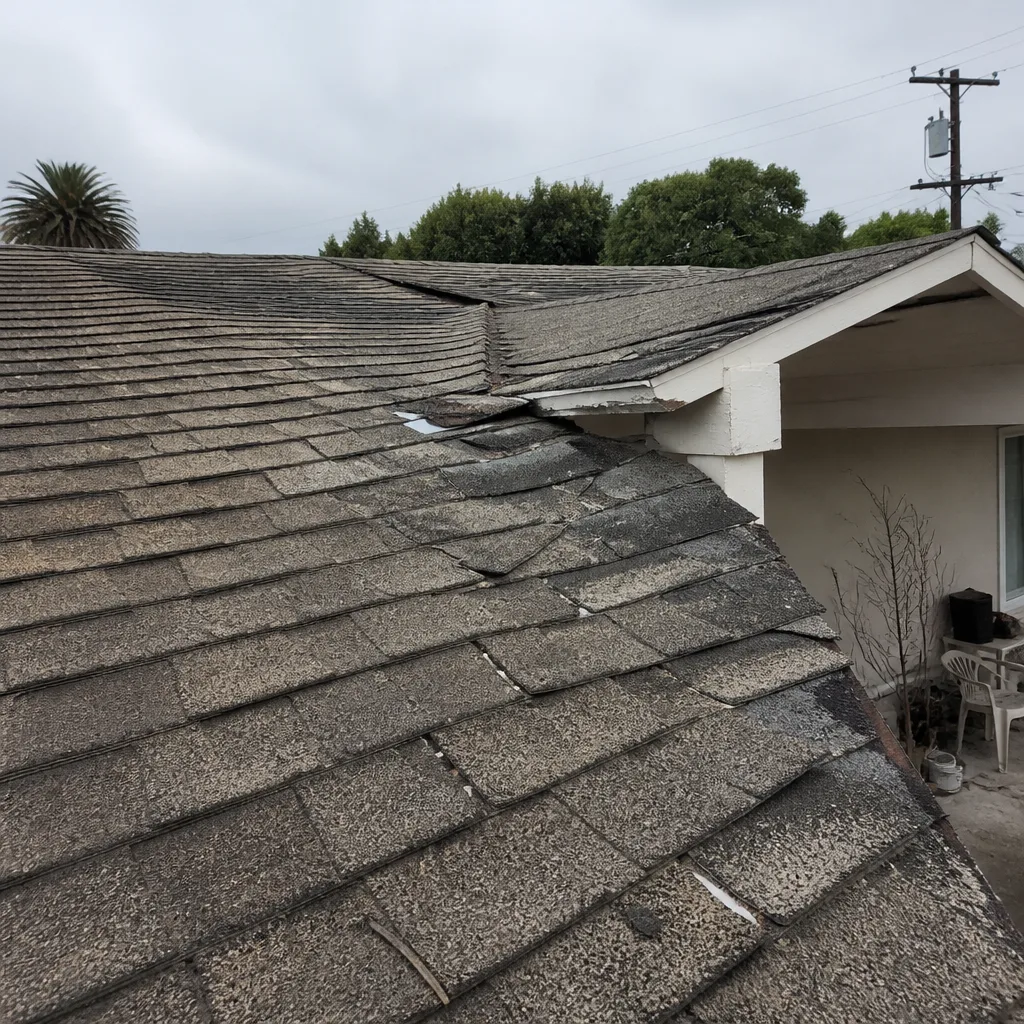 Before
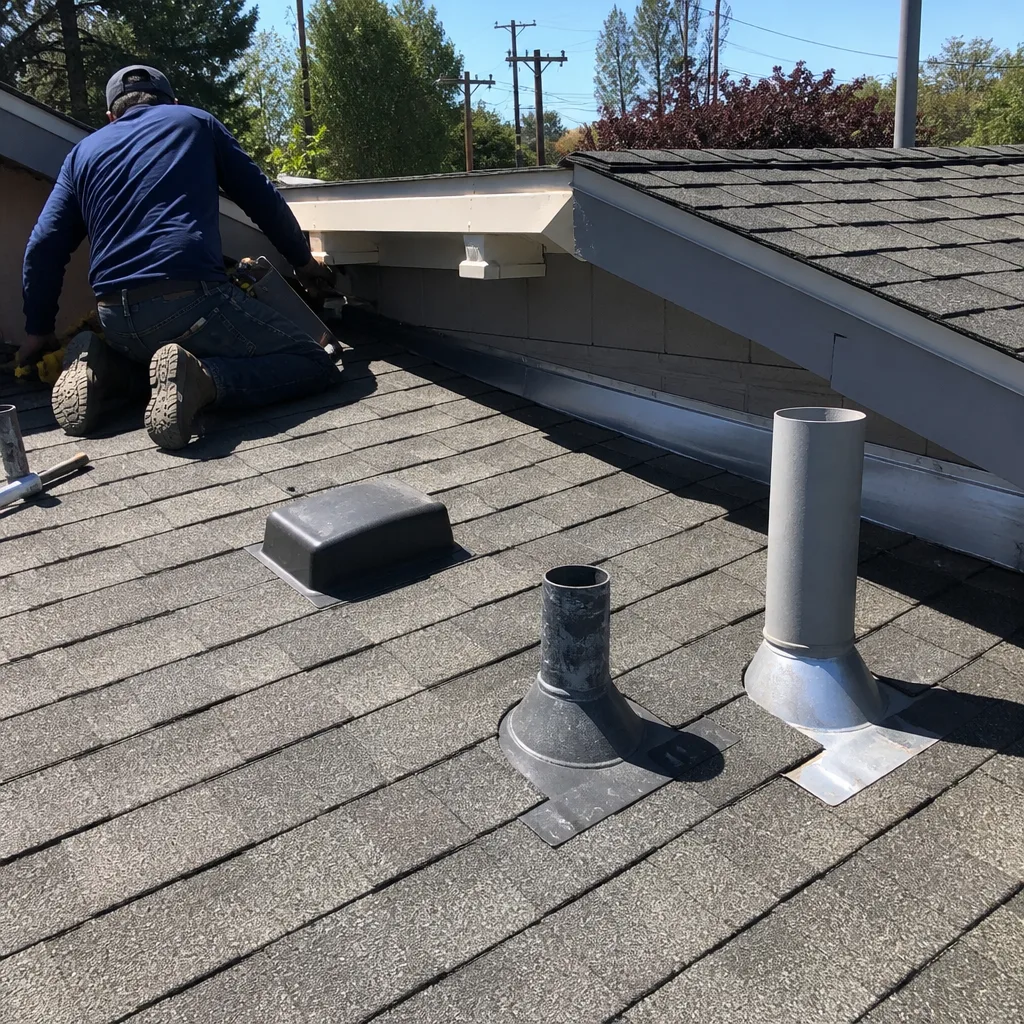 After
After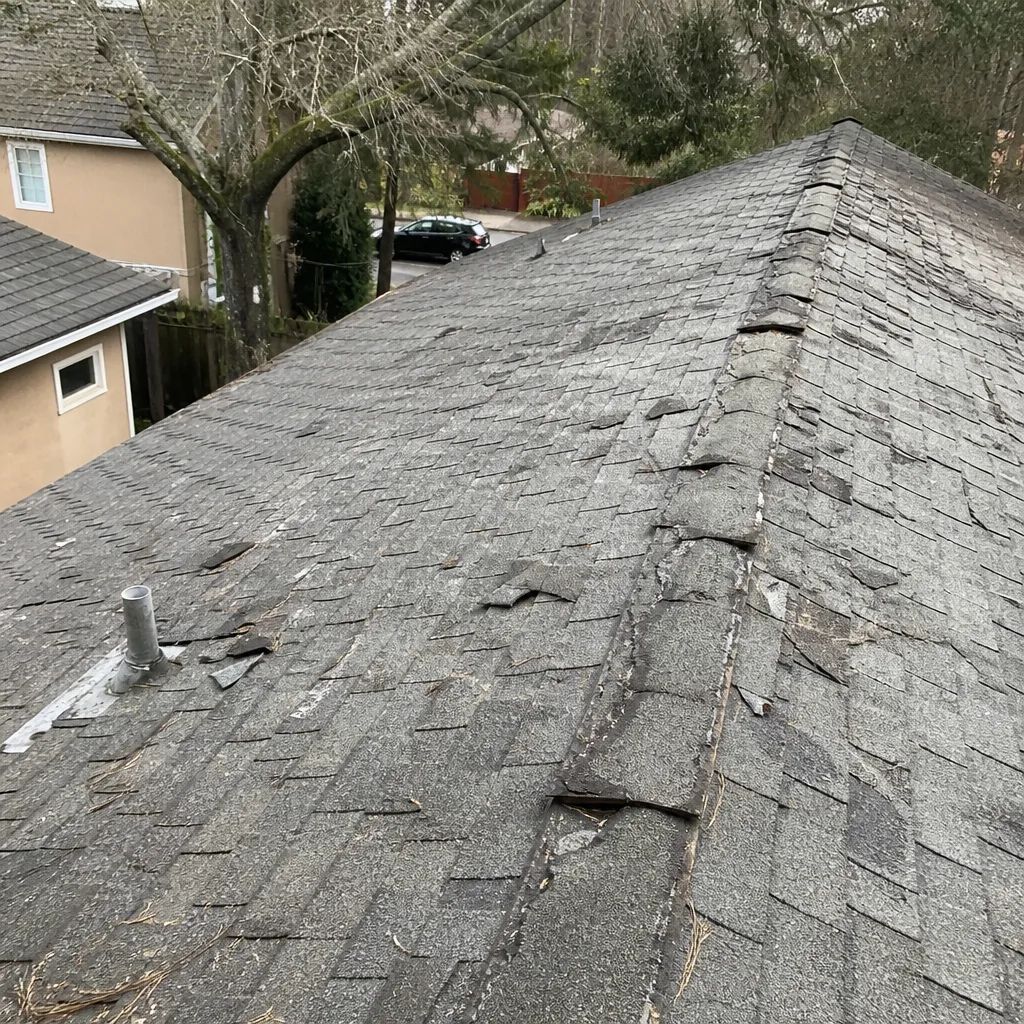 Before
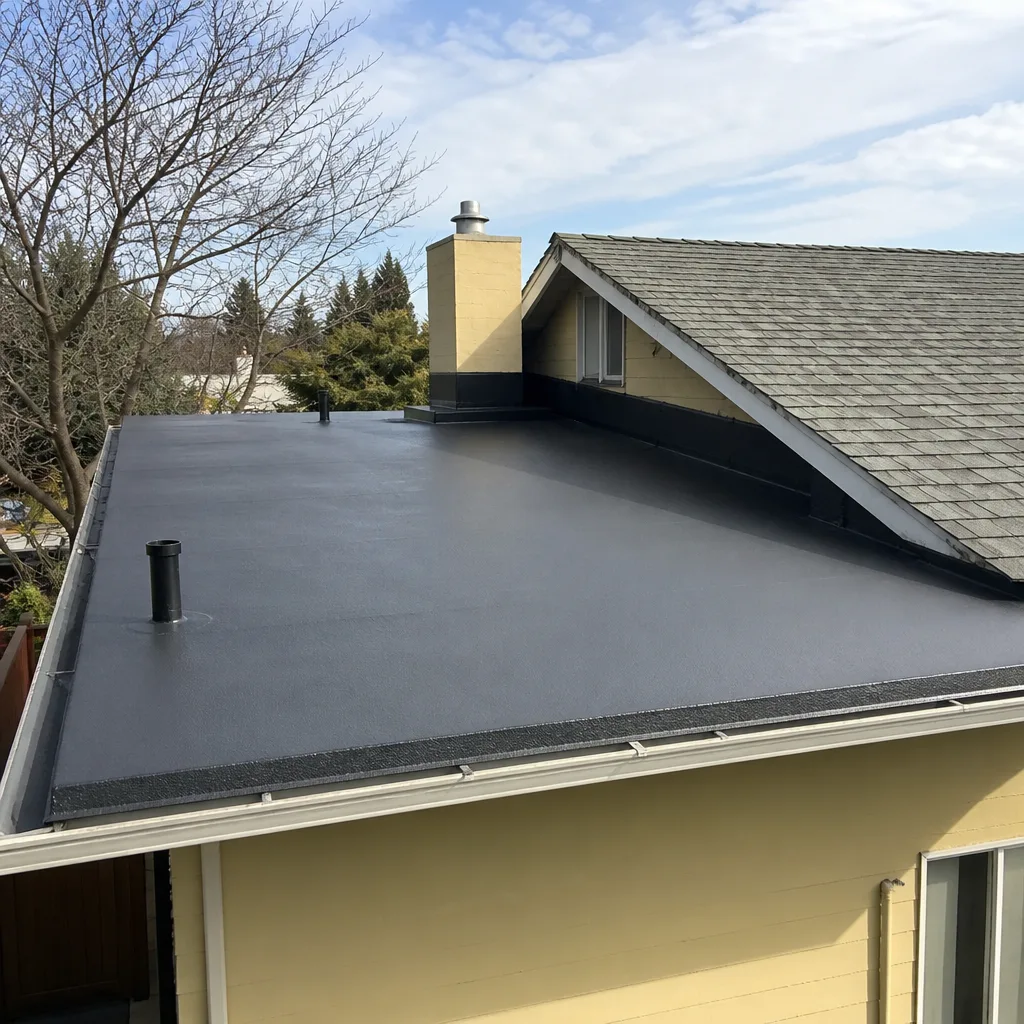 After
AfterReplacement Cost & What’s Included
In San Jose, a complete flashing replacement on a typical Boral roof runs $350 to $900. The price depends on three things: how many feet of flashing need to be replaced, whether the old underlayment and tar paper beneath the flashing have also rotted out, and how accessible the area is. A one-story sidewall flashing replacement at the low end of that range. A steep two-story chimney flashing with full underlayment replacement at the top end. If you tell me what’s on your roof and I’ll tell you what it needs – straight answer, no guesswork.
What you’re paying for is the removal of the old flashing, new metal cut for your Boral profile, fresh sealant and fasteners, and resetting the tile so it seats properly over the new flashing. That’s the part that separates a repair that lasts from one that leaks again in nine months. We put the written price in front of you before any work begins, and the written guarantee on the flashing replacement is handed to you when the crew finishes.
DIY or Call Us?
You can safely diagnose a flashing problem from the ground: look for rust, lifts, missing tile, or stains near transitions. What you shouldn’t do is climb up on a tile roof and pull flashing yourself. Tile is heavy, walks differently at each pitch, and one wrong step cracks three tiles and turns a $400 flashing job into a $3,000 re-tile section plus the flashing. The roof pitch, the hidden underlayment condition, and the profile match all matter, and that’s before we talk about the ladder work itself. If the flashing is high, on a two-story wall, or involves a chimney, the risk isn’t worth the savings. Call (669) 274-0078 for a straight quote. The estimate is free, and no one pressures you on the phone.
FAQs
Flashing on a typical San Jose Boral roof lasts 15 to 25 years, not the 30-plus the tile itself often reaches, and not as long as the underlayment you’d hope. The real lifespan depends on the metal gauge, how much sun and rain the flashing sees, and how well the previous installer lapped the corners. A 20-year-old flashing is always suspect, even if the tile above it looks new. Call (669) 274-0078 and we’ll tell you what condition yours is in.
In most cases, a proper answer is no. A bead of caulk or a patch over a rusted flashing is a temporary measure that fails at the first hot summer, because the metal keeps moving with temperature changes and the patch can’t. Replacement is the repair that holds. We’ll tell you honestly if a patch is viable for your situation, and we’ll put that recommendation in writing.
Most flashing replacements on Boral roofs in San Jose run half a day from setup to cleanup, including removing the old metal, cutting the new profile, and re-bedding the tile. A full chimney wrap or a steep second-story wall with underlayment replacement can extend that to a full day. You’ll get a precise window at the time of the estimate.
Yes. Our trucks carry .024-gauge aluminum and 26-gauge galvanized step flashing cut for the Boral Barcelona and Villa profiles, which covers most Boral roofs in San Jose. We also stock the matching fasteners and sealants. For unusual profiles or custom bends, we order the metal pre-cut and have it on-site the next business day. If you’re not sure what profile you have, call (669) 274-0078 and we’ll help you identify it from the street or from a photo.
Written by Greg Holloway, Owner, Tilehurst Roofing San Jose at Tilehurst Roofing San Jose, serving San Jose and nearby areas.