
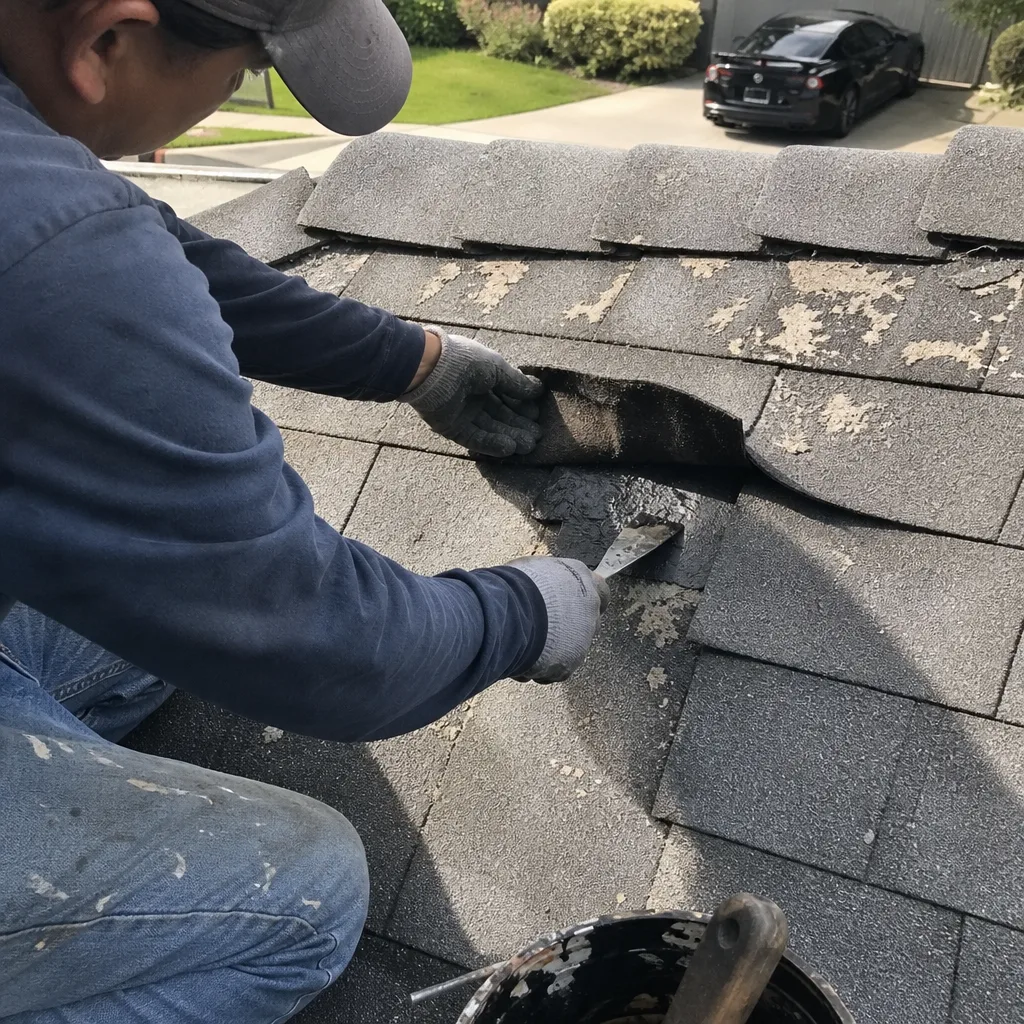
Last updated October 17, 2026
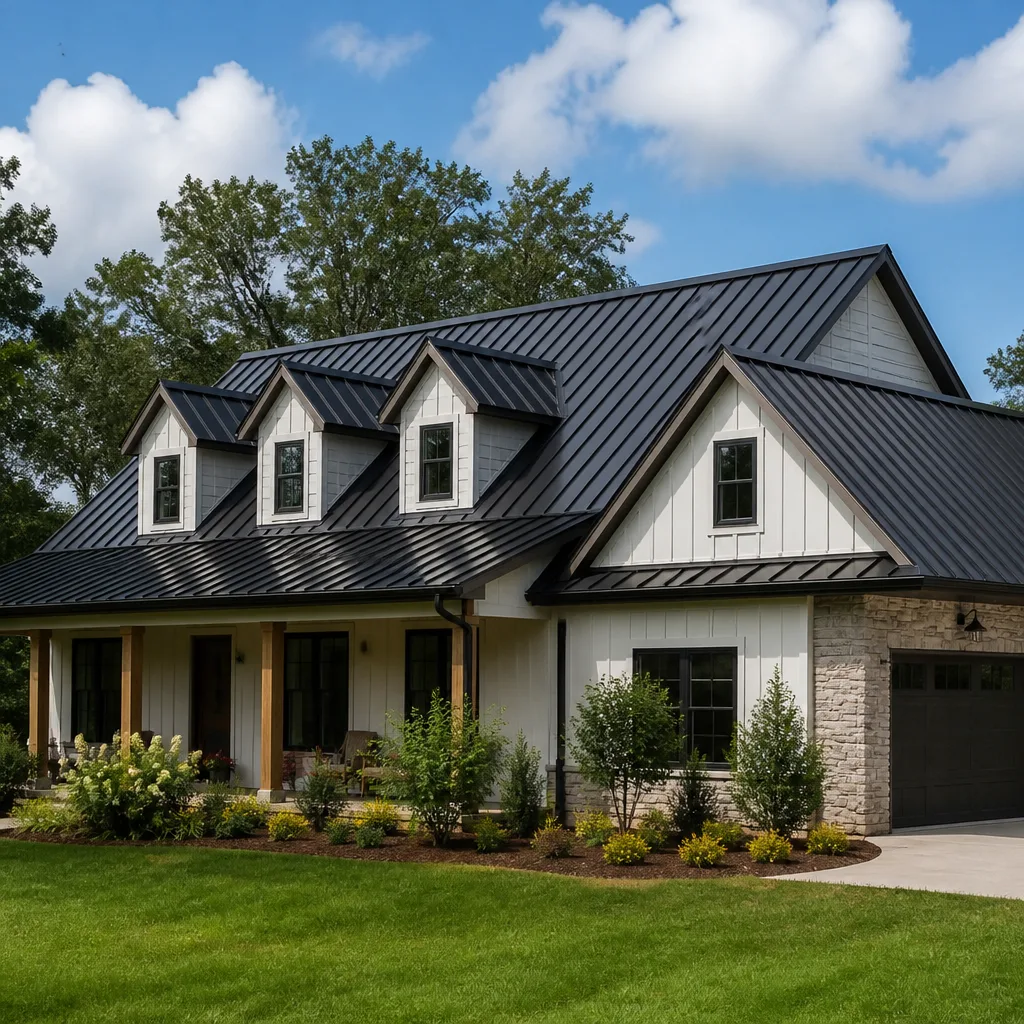 Metal roofing
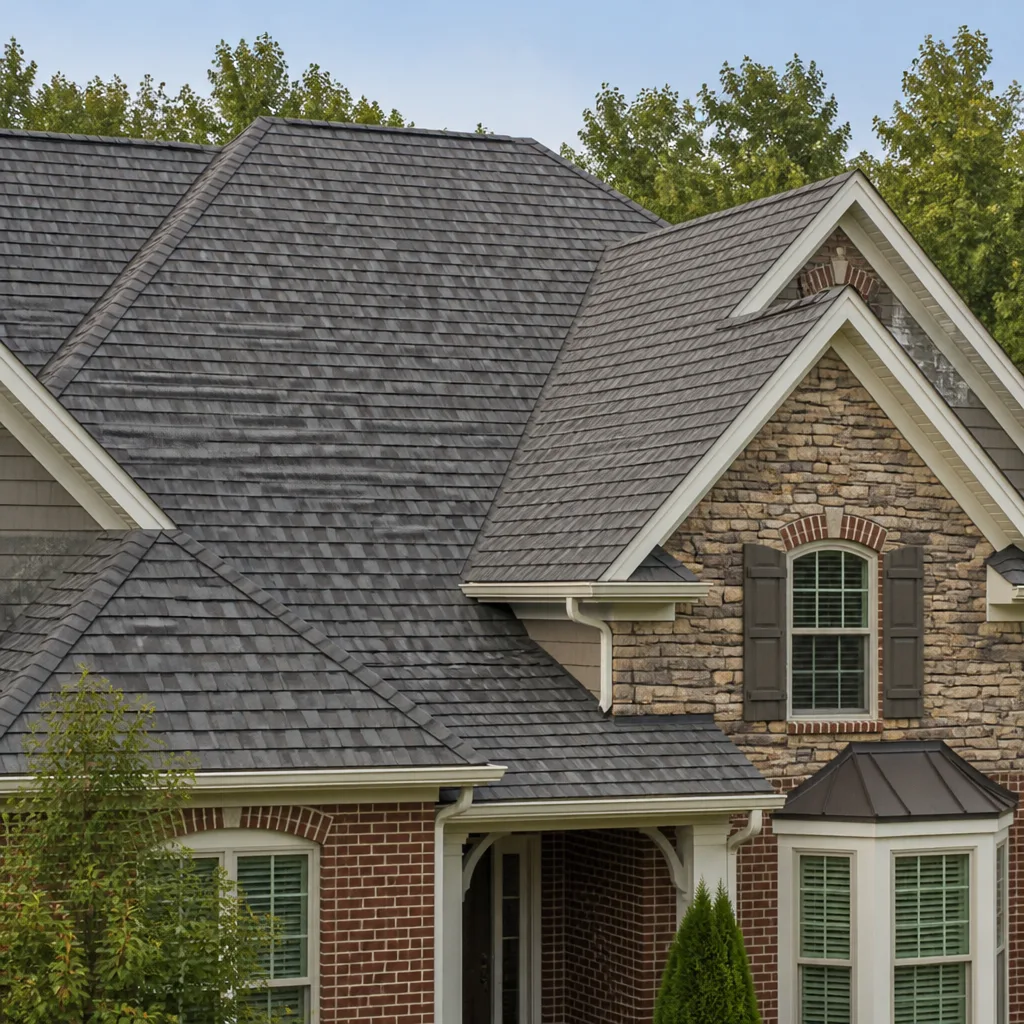 Architectural shingles
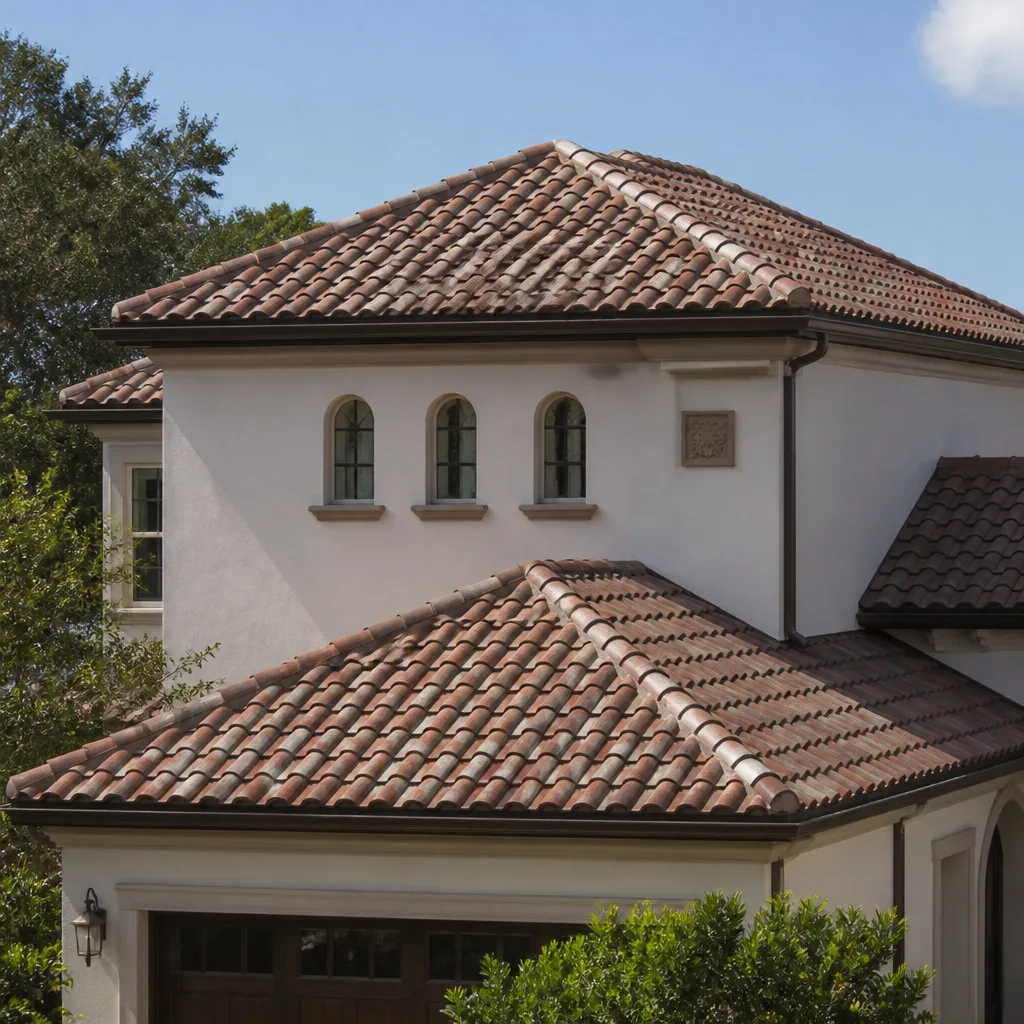 Tile roofing
 GAF
GAF Owens Corning
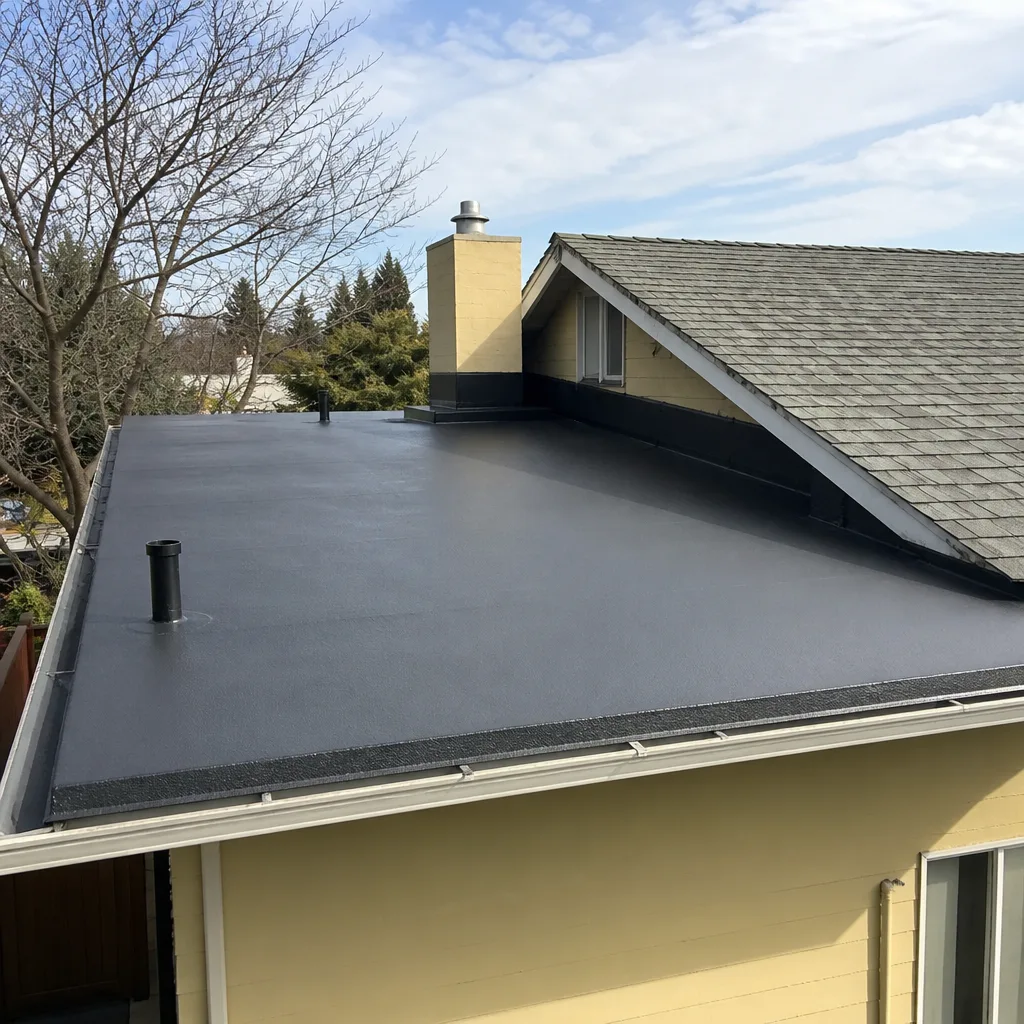
 Flat & low-slope
Free roof inspection with deck photos before we talk money - GAF and Owens Corning certified installation
DIY vs Professional Roofing: The San Jose Homeowner’s Decision Guide
Here’s a fact most roofing guides won’t tell you: your homeowner’s insurance policy is more likely to determine whether you should DIY a roof repair than your skill with a hammer. A 2023 California Department of Insurance review of residential claims found a growing number of denials tied to self-performed work that lacked permits, particularly on roofs. By the time a homeowner discovers the exclusion, the leak has already spread. This guide will walk you through the real decision points for San Jose homeowners: permit triggers, pitch math, insurance language, and the honest cost of a fall. For how to hire a roofing contractor in San Jose: a step-by-step guide, see our companion resource. You won’t get a lecture about “knowing your limits.” You’ll get the specific facts that let you make the call for your house, your slope, and your policy.
Styles & brands we work with
Quick Answer
For most San Jose homeowners, DIY is reasonable for gutter cleaning, ground-level inspections, and minor sealant touch-ups on accessible areas. It becomes a bad trade the moment a task involves walking the roof surface, touching flashing, or altering any component covered by a permit. Steep-slope roofs common in Willow Glen and the Rose Garden make the fall-math worse, and San Jose’s permit rules turn a $200 DIY patch into a multi-thousand-dollar insurance claim denial if done wrong.
Table of Contents
- When DIY Roof Work Makes Real Sense in San Jose
- Where the Permit Line Actually Sits in San Jose
- How to Read Your Insurance Policy Before Touching Anything
- Why San Jose Rooflines Make Standard DIY Advice Useless
- The Real Cost of DIY: Savings vs. Correcting, Permits, and Injury
- Three Questions to Ask Before You Open the Ladder
- How Material Choice Changes the DIY Calculus
- Common Mistakes to Avoid
- When to Call a Professional
- Frequently Asked Questions
- The Bottom Line
When DIY Roof Work Makes Real Sense in San Jose
We’re not going to pretend every roofing task requires a crew and a permit. Some jobs are genuinely owner-friendly, and telling you otherwise would be bad advice. The honest list for San Jose looks like this:
- Gutter and downspout clearing. In San Jose, our dry season is long and our fall leaf drop is heavy, especially around mature oaks in Almaden Valley. Clearing gutters from a ladder twice a year is legitimate homeowner work. The risk is ladder misuse, which is manageable with a stabilizer and a spotter.
- Ground-level visual inspection. Walk the perimeter after winter storms and look for lifted shingles, missing granules collecting in the downspout, or caulk peeling at penetration points. You don’t need to get on the roof to spot 60% of developing problems.
- Sealant touch-ups. A tiny gap around a vent pipe or a skylight frame on a low-slope, walkable roof section can be sealed with the right product. We’re talking about accessible areas under a 4:12 pitch, with a harness and a plan. Anything steeper or higher, and the sealant tube becomes a liability you’re holding at altitude.
What these jobs share is this: none of them alter the roof system. They maintain the edges and the surfaces you can safely reach. The moment you pick up a pry bar or a bundle of shingles, you’ve crossed from maintenance into modification, and in San Jose that’s where the rules change.
Where the Permit Line Actually Sits in San Jose
San Jose’s building code is clear about what requires a permit, and it’s more than most homeowners assume. Here’s the working knowledge our team at Tilehurst Roofing San Jose home operates by, based on years of navigating San Jose’s permit office:
- Repairs covering less than 100 square feet of roofing surface typically do not require a permit, as long as the work does not replace sheathing or alter the roof structure.
- Any repair that includes decking or sheathing replacement requires a permit. Southern-facing San Jose roofs take serious sun exposure; when the decking is compromised, the structure is being modified, not just covered.
- Full reroofs and replacements always require a permit in San Jose, with no exceptions for homeowner labor. This includes tear-off with multiple layers and any job where the underlayment is fully replaced.
- Work that changes the roofline, adds skylights, or modifies ventilation falls under additional plan review and structural sign-off.
A permit in San Jose costs real money, and the fee is the least of it. The inspection schedule is the hidden cost. Your DIY reroof sits exposed to weather while you wait for the underlayment inspection, then the final inspection, and if you fail either one, you’re paying for a correction before you can close up. A professional roofing company in San Jose pulls the permit, schedules the inspections, and knows what the inspector’s looking for before the work starts. That’s not a convenience. It’s the difference between a roof done in a week and a roof done in six weeks with two re-visits from the city.
How to Read Your Insurance Policy Before Touching Anything
Here’s the scenario we see repeatedly in San Jose: a homeowner does a patch job himself in March, a storm blows through in December, the leak shows up in the living room, and the claim gets denied because the insurer determines the unpermitted repair contributed to the failure. The homeowner never read the exclusion. The time to read the policy is before the caulk gun comes out.
Pull out your policy and look for these phrases:
- “Permitted work” or “work performed by a licensed contractor” – If this language appears in the coverage section, self-performed repairs may void coverage for any subsequent damage traced to that area.
- “Wear and tear exclusion” – Almost all policies exclude gradual deterioration. If your DIY attempt is later classified as contributing to wear, the insurer has a documented reason to deny.
- “Reasonable maintenance” language – Some policies require proof of professional maintenance or repairs. A stack of Home Depot receipts doesn’t carry the same weight as a licensed contractor’s invoice.
- Sub-limits for roof damage from named perils – California policies increasingly cap roof payouts at actual cash value rather than replacement cost, especially for older roofs. Your DIY economics don’t change the policy language.
- 3:12 pitch – rises 3 inches for every 12 inches of horizontal run. This is the walkable roof. You can stand on it carefully with good shoes.
- 6:12 pitch – rises 6 inches for every 12 inches of run. This requires roof jacks, toe boards, and a safety harness. Most homeowners don’t own any of those three.
- 9:12 and steeper – commonly found in Willow Glen’s older craftsman homes and hillside builds throughout east San Jose. You do not stand on this roof without staging. You work from roof jacks anchored to the framing, and a fall means sliding over the eave, not stopping at it.
- Permit correction. If you replace decking or exceed 100 square feet without a permit, you’ll pay double permit fees plus market-rate correction costs to bring it to code. This can push a $400 DIY patch past $2,000.
- Insurance denial. A denied claim for water damage from a self-performed repair can cost $8,000 to $35,000 in interior remediation, depending on the ceiling area affected. That single item wipes out a decade of DIY savings.
- Fall injury. The CDC reports a fall from a roof results in an average of 9 days of hospitalization and over $50,000 in medical costs. Even with insurance, the out-of-pocket exposure outweighs the repair savings on the first fall.
- Supplies you didn’t plan for. A starter roll of underlayment, a bundle of matching shingles, a ridge cap replacement – these add up fast, and San Jose’s material pricing isn’t what you’ll see in national DIY videos.
- “Will I be standing on the roof surface, or can I do this from a ladder?” If the answer is ladder-only, like gutter clearing or fascia inspection, DIY is reasonable. If the answer involves your feet leaving the ladder, the risk profile changes completely. This is not about skill. It’s about a fall distance that does not care about your pride.
- “Does this task alter any part of the roof system?” Replacing a shingle, touching flashing, adding sealant around a penetration – these are system alterations. In San Jose, that’s where permits and code compliance enter the conversation. Maintenance cleans and clears. Alteration modifies. Know the difference.
- “Would I accept this expense if the insurance company denies the claim?” If the answer is no, you cannot afford to DIY. The insurance exposure is a real cost line item, not a hypothetical. Read the policy language, get the agent’s answer in writing, and decide with the full financial picture.
- Asphalt shingles – the most DIY-accessible in theory. Brands like IKO and Atlas make architectural shingles that are straightforward to install with basic hand tools, if the pitch is walkable and the decking is sound. The caveat: matching a 20-year-old color is harder than the YouTube video suggests, and a mismatched patch looks like exactly what it is.
- Concrete and clay tile – common throughout San Jose’s Spanish-style neighborhoods. Tile is brittle. One wrong step cracks the tile under your feet, and suddenly a $200 repair becomes a $1,500 tile replacement. Professional crews walk tile with distribution boards and know the breakage points. Boral’s concrete tile lines are excellent, but they punish amateurs hard.
- Standing seam and metal roofs – increasingly common on modern builds. The panels themselves are easy to dent and difficult to source as single pieces; a panel repair almost always means contractor channels and custom fabrication.
- Starting the job without reading the insurance policy. Every week, a San Jose homeowner discovers an unpermitted-repair exclusion at claim time. Pull the policy before the ladder. The five minutes of reading beats the denial letter.
- Assuming “handy” equals “safe on a roof.” Handiness does not prevent ladder slip-outs on decomposed granite driveways, and it does not create fall protection on an 8:12 Willow Glen gable. The roof’s slope and your lot’s grade are physical facts, not skill challenges.
- Overlooking the permit trigger. “It’s just a small repair” is not a legal category. In San Jose, decking replacement and full underlayment replacement trigger permits regardless of square footage. Assume anything structural requires the city’s sign-off.
- Using the wrong sealant for the material. Silicone does not bond to asphalt. Polyurethane does not bond to some tile surfaces. A $12 sealant mistake can fail within one rainy season and drive water behind the flashing.
- Ignoring the manufacturer’s installation specs. Every shingle brand has specific nailing patterns, overlap requirements, and ventilation standards. A repair that violates manufacturer specs voids the material warranty, and the homeowner learns this only when the warranty matters.
- Underestimating San Jose’s sun exposure. South-facing slopes in San Jose get brutal UV and heat cycling. A repair that holds in a mild climate fails faster here if the underlayment or sealant is not rated for the temperature swings.
- Treating a roof as a single surface rather than a system. The leak in the ceiling is rarely directly above the water stain. Water travels along underlayment seams, and a DIY patch on the visible spot misses the actual entry point. We see this pattern constantly on older San Jose homes with multiple roofing layers.
If you’re not comfortable reading the policy, call your agent and ask one direct question: “If I perform a roof repair myself and it later fails, does my policy cover the resulting damage?” Get the answer in writing. The email takes five minutes and can save you a five-figure denial.
Why San Jose Rooflines Make Standard DIY Advice Useless
Most generic DIY roofing articles are written for the American suburb of the imagination: a 3:12 pitch ranch house on a flat quarter acre. San Jose is not that city. We have neighborhoods like Willow Glen and the Rose Garden where 100-year-old homes carry steep gable roofs, plus hillside lots throughout the east foothills and communications hill that tilt the whole property.
Here’s the pitch math in plain language. Roof pitch is expressed as a ratio: the vertical rise divided by the horizontal run. So:
Add the lot grade. Many San Jose hillside homes sit on slopes that make ground ladders unstable and extend the fall distance by a full story at the downhill corner. A “minor” roof repair on one of these homes is genuinely dangerous work. This is not hyperbole. We have seen homeowners in east San Jose start an afternoon shingle patch and end it with a call for a fall injury because the ladder base shifted on a decomposed granite driveway. The math doesn’t care how handy you are.
The Real Cost of DIY: Savings vs. Correcting, Permits, and Injury
Let’s run the honest numbers for a common San Jose scenario: a small leak around a plumbing vent on a 6:12 roof. This is a two-hour job for a professional, and a tempting Saturday afternoon save for a homeowner.
DIY budget: Replacement flashing boot ($35), sealant ($18), roof jacks and brackets if you don’t own them ($120), harness kit rental ($40), and six hours of learning-and-doing time. Realistic DIY outlay: $200 to $400 in tools and materials, plus your Saturday.
Professional cost: Most San Jose roofing companies price this repair between $350 and $650, depending on roof accessibility and the condition of surrounding shingles. The written quote includes the repair, the guarantee, and the labor. If the repair fails inside the warranty window, the pro returns at no charge under a written guarantee. Our parent company, the Kingswell family of roofing companies founded in 2000, has built its reputation on exactly this: every repair gets a written guarantee, and if it fails inside the guarantee period, the crew returns to correct it under the 365-Day Done Right Promise at no charge.
Now add the costs most DIY calculations omit:
The honest conclusion: on any job that requires you to leave the ladder and stand on the roof surface, the professional quote is the cheaper option when you count the full exposure.
Three Questions to Ask Before You Open the Ladder
If you take nothing else from this guide, take this framework. Three questions, answered honestly, will tell you which jobs to own and which to hand off. For a deeper look at what professional repair actually involves, see our page on roof repair in San Jose.
Notice what’s missing from this framework: “How handy are you?” Handiness is the factor overconfident DIYers overweight and insurance companies ignore entirely. Risk tolerance, not skill, is the honest decision variable.
How Material Choice Changes the DIY Calculus
Here’s a factor most DIY discussions skip: the material on your roof determines how forgiving a repair is, and how much expertise the work actually requires. San Jose homes carry everything from 1950s composite shingles to clay tile and standing seam metal.
The deeper point: material choice is part of the DIY decision. A roof replacement in San Jose done by a professional gives you genuine material selection from seven major manufacturers, including GAF, CertainTeed, Owens Corning, IKO, Atlas, Tamko, and Boral, so the product matches the home. A DIY patch gives you whatever the local big-box store had on the shelf that Saturday. Those are different standards, and any homeowner who’s been through a failed repair already knows which one they’d choose now.
Common Mistakes to Avoid
When to Call a Professional
If the repair involves the roof surface beyond a ladder’s reach, a permit, flashing work, decking, or a pitch steeper than 4:12, call a professional. The same applies if your insurance policy contains “permitted work” language, if your home sits on a hillside lot with extended fall exposure, or if you’ve already attempted a repair that failed. A failed patch is not just wasted money; it’s a moisture pathway that gets more expensive every week it’s open. Staying ahead of problems starts with a roofing company maintenance checklist for San Jose homeowners. Tilehurst Roofing San Jose offers free estimates throughout San Jose, and every job starts with a written price before any work begins. Call (669) 274-0078 to schedule your free estimate.
Frequently Asked Questions
Small repairs like vent boot replacements or sealant issues generally run $350 to $650, while larger repairs involving flashing, decking, or multiple shingle replacements range from $800 to $2,500. San Jose’s permit fees and inspection scheduling add time but not significant cost to professional work. Call (669) 274-0078 for an exact quote, and you’ll get a written price before any work starts.
Some policies exclude damage caused by unpermitted or self-performed work, while others cover resulting damage as long as the original repair wasn’t the cause of the failure. The only way to know is to read your policy’s exclusions section and call your agent with the direct question before doing any work. Get the answer in writing.
In San Jose, repairs under roughly 100 square feet that don’t involve decking or underlayment replacement typically do not require a permit. Any job that touches the roof sheathing, replaces the underlayment, or changes the roofline requires a city permit and inspection schedule. When in doubt, call the city or work with a contractor who knows the local trigger points.
Technically, yes, a homeowner can act as their own general contractor and pull a permit for a full reroof. Practically, the inspection schedule, material logistics, and skill requirements make it a months-long project with real weather exposure risk. Most San Jose homeowners who attempt this find the professional quote is cheaper when time, corrections, and exposure are counted.
The transition from ladder to roof surface is where most falls occur, especially on steep pitches with unstable base conditions like decomposed granite or sloped gardens. Falls from roof height average over $50,000 in medical costs, and no amount of DIY savings offsets a single fall. The roof’s slope, not your handiness, is the controlling variable.
Watch for water stains on ceilings, damp insulation in the attic, granule accumulation in gutters, and daylight visible through the roof deck from the attic. If a professional repair fails, a written guarantee brings the crew back at no charge; if your own repair fails, you eat the correction cost and any interior damage. Most professional repairs include this guarantee in writing before the job starts.
The Bottom Line
The honest DIY vs professional decision in San Jose isn’t about how handy you are. It’s about three measurable factors: what your insurance policy allows, what your roof pitch and lot grade demand, and what the full exposure costs when things go wrong. For ground-level work, DIY is reasonable. For anything on the roof surface, the math favors a professional who carries a permit, a written guarantee, and the fall protection you don’t own. Read the policy before the ladder. Know your pitch before you climb it. And when the cost of a mistake outweighs the savings, call someone who answers the phone and puts the price in writing. For more guides & resources, explore our blog.
Written by Greg Holloway, Owner at Tilehurst Roofing San Jose, serving San Jose since 2000.
See the difference
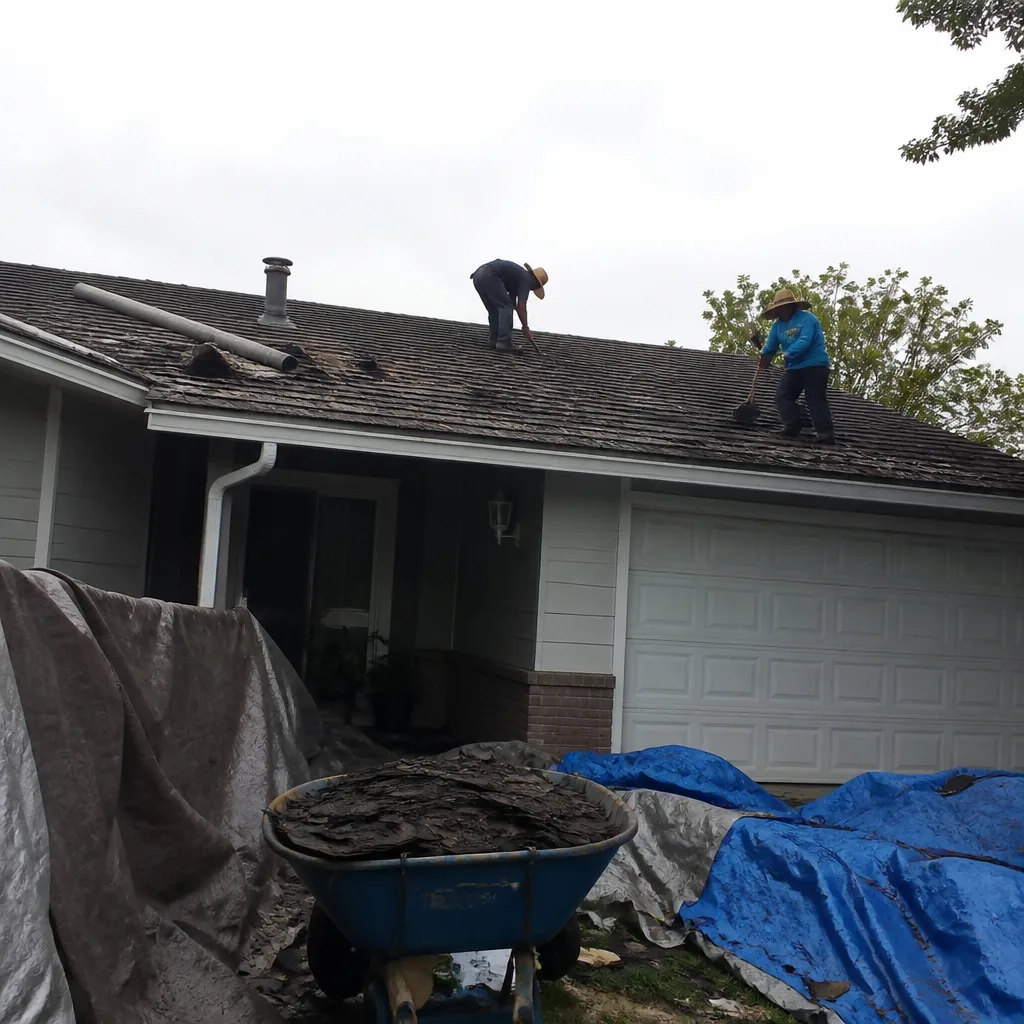 Before
 After
After Before
 After
After Before
 After
After