
Last updated October 17, 2026
 Metal roofing
 Architectural shingles
 Tile roofing
 GAF
GAF Owens Corning
 Flat & low-slope
Free roof inspection with deck photos before we talk money - GAF and Owens Corning certified installation
Roofing Company Maintenance Checklist for San Jose Homeowners
Here’s a number that surprises most San Jose homeowners: a full roof replacement costs somewhere between $12,000 and $25,000 in Santa Clara County, but the maintenance visit that can add five to ten years to that roof’s life typically runs under $400. Most people never schedule it because nobody ever told them what a real maintenance visit actually includes. This guide fixes that. You’ll learn the exact tasks a legitimate San Jose roofing company maintenance call should cover, what the written report you receive should contain, how to spot a sales pitch disguised as an inspection, and what a fair price looks like in this market.
Styles & brands we work with
Quick Answer
A legitimate roofing maintenance visit in San Jose should take 60 to 90 minutes and end with a written condition report, dated photos, and specific recommendations. The visit must include gutter clearing, flashing inspection around penetrations, ridge cap and shingle assessment, attic ventilation verification, and a moss or debris check on shaded slopes. If you walk away without photos and a written report, you paid for a sales call.
Table of Contents
- What a Legitimate Maintenance Visit Actually Covers
- The Written Report: How to Tell a Maintenance Report from a Sales Pitch
- San Jose-Specific Maintenance Triggers You Won’t Find on Generic Checklists
- What a Maintenance Visit Should Cost in the South Bay
- Your Own Three-Minute Maintenance Log Between Professional Visits
- How Often Should San Jose Homeowners Schedule Maintenance?
- How to Choose a Roofing Company for Maintenance Work
- Common Mistakes to Avoid
- When to Call a Professional
- Frequently Asked Questions
- The Bottom Line
What a Legitimate Maintenance Visit Actually Covers
Most maintenance checklists online read like they were written by someone who has never climbed a ladder in San Jose. “Inspect your roof twice a year,” they say, as if that sentence tells you anything. Here’s the task-by-task breakdown of what a real roofing company in San Jose should do during a maintenance visit.
1. Gutter Cleaning and Downspout Flushing
This is the least glamorous part of roof maintenance and the most frequently skipped. A technician should remove all debris from gutters by hand or with a scoop, then flush downspouts with water to confirm they drain freely. In San Jose, valley oaks and liquidambar trees drop a staggering amount of leaf material from October through December. Clogged gutters back water up under the shingle line at the eave, which is exactly where roof rot starts. The technician should also check that gutters are pitched correctly toward downspouts and that all hangers and brackets are still secure.
2. Flashing Inspection at All Penetrations
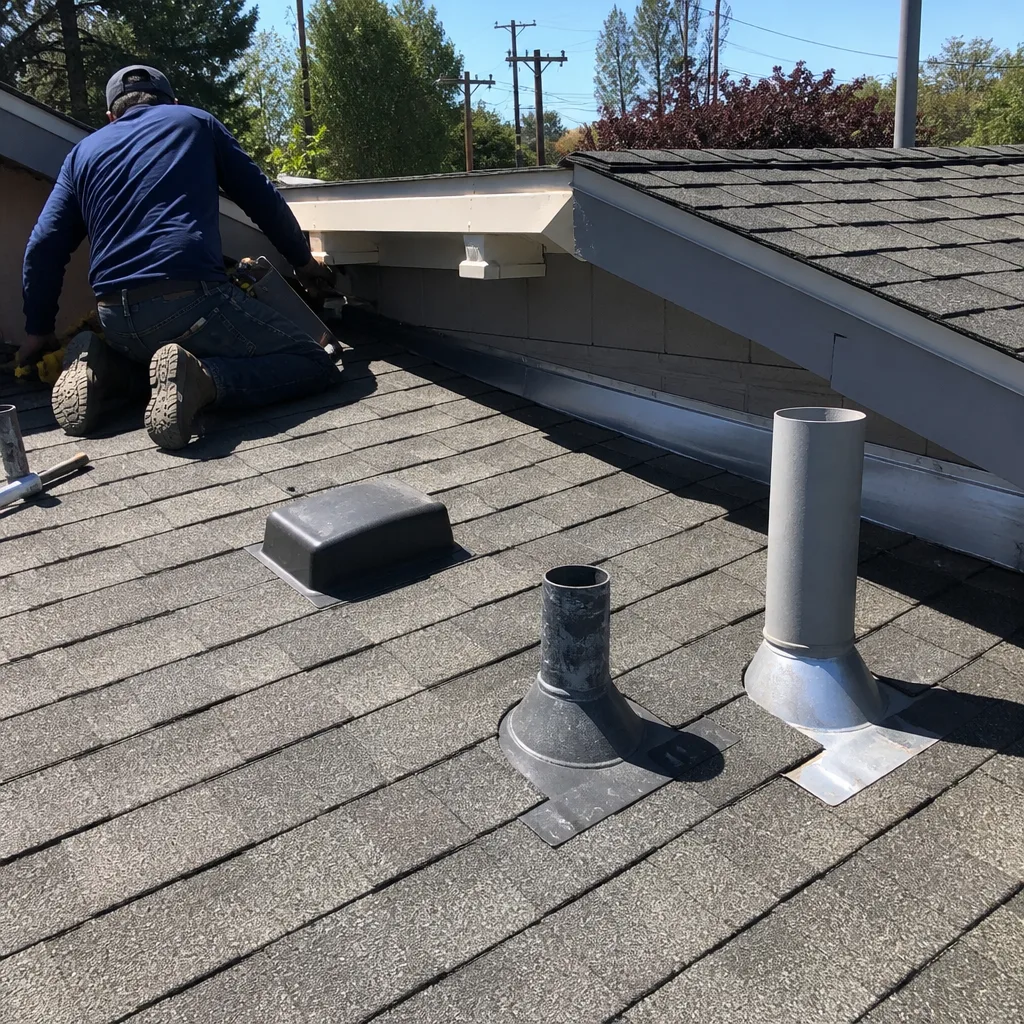
Over 80 percent of roof leaks originate at a penetration or transition, not in the open field of shingles. A thorough maintenance visit checks every piece of flashing: around plumbing vent pipes, at the chimney, at skylights, around any attic vents or exhaust fans, and where roof planes meet walls. The technician should look for lifted flashing, dried-out sealant, rust on galvanized metal, and gaps at counterflashing. In San Jose’s dry summers, sealant around pipe boots shrinks and cracks far faster than homeowners expect. This is where most “sudden” winter leaks actually begin.
3. Ridge Cap and Shingle Assessment
The ridge cap is the highest-wear area of any asphalt shingle roof. Wind hits it first, sun hits it hardest, and when ridge cap shingles fail, water enters directly along the peak. A maintenance visit should include walking the ridge line, checking for cracked or blown-off cap shingles, and verifying that no nails are exposed. In the open shingle field, the technician looks for granule loss, curling edges, soft spots in the decking, and any shingles that have already slipped. San Jose’s summer temperatures routinely push roof surfaces past 140 degrees, which accelerates granule shedding on older shingles.
4. Attic Ventilation Verification
This is the task most “maintenance” companies skip entirely because it requires going inside your home. Proper attic ventilation is not optional in San Jose. Without balanced intake at the soffits and exhaust at the ridge or gable ends, attic heat builds to 150 degrees or more in summer, cooking shingles from underneath and forcing your air conditioner to work harder. The technician should enter the attic, confirm insulation is not blocking soffit vents, check for signs of condensation or mold on the underside of decking, and verify that bathroom and kitchen exhaust fans vent to the exterior, not into the attic space.
5. Moss and Debris Check on Shaded Slopes
North-facing roof planes in San Jose neighborhoods with mature tree cover, like Willow Glen, Rose Garden, and pockets of Almaden Valley, are prime moss territory. Moss traps moisture against shingles, lifts edges, and shortens roof life dramatically. A legitimate maintenance visit includes a specific assessment of shaded slopes, and if moss is present, a recommendation for treatment rather than destructive pressure washing.
6. Drip Edge and Fascia Board Check
Drip edge is the metal strip at the roof’s perimeter that directs water into the gutter rather than behind it. When drip edge is missing or pulling away, water tracks back toward the fascia board. The technician should check for rot at fascia boards, especially at corners, and verify that drip edge is present and properly lapped. In older San Jose homes built before drip edge became code standard, this is one of the most common points of premature eave failure.
The Written Report: How to Tell a Maintenance Report from a Sales Pitch
Here’s the truth most roofing companies don’t want you to know: a free inspection is rarely free. Somebody pays for it, and that somebody is usually the homeowner who gets quoted a full replacement for minor wear that a $200 repair would have solved. The difference between a maintenance report and a sales pitch comes down to specificity, photos, and language.
A legitimate written report includes:
- Dated photographs of every issue identified, not just the dramatic ones. If a technician says your flashing is failing, there should be a photo of that exact flashing.
- Specific locations. “Flashing deteriorated at the north side of the chimney” is a maintenance finding. “Flashing issues throughout” is a sales opener.
- Priority ratings. A good report separates “address now” from “monitor” from “plan for in 3-5 years.” If everything is marked urgent, you’re being sold.
- Measurements. “Six cracked shingles at the southwest eave” tells you the technician actually looked. “Significant shingle deterioration” tells you nothing.
- A repair vs. replace recommendation with reasoning. A maintenance professional will tell you when a roof can be repaired and should be repaired. A salesperson will pivot every finding toward replacement.
Red flags in a write-up include vague language like “at the end of its life” without a specific remaining lifespan estimate, photos of other people’s roofs (check the background; if the neighboring house looks different from yours, be suspicious), and a quote that appears before the report does. The report should arrive within 48 hours of the visit, and the quote should follow only if you asked for one.
At Tilehurst Roofing San Jose home maintenance visits, the report is written before anyone discusses money. If a repair is needed, the written price follows the report, not the other way around. That sequencing matters.
San Jose-Specific Maintenance Triggers You Won’t Find on Generic Checklists
Generic roof maintenance articles are written for a national audience and miss the San Jose conditions that actually cause problems here; see our Roofing Permits, Codes & Inspections in CA: What You Need to Know for local compliance context. These are the local factors that should be on your mind between visits.
Valley Oak and Liquidambar Leaf Load
San Jose’s older neighborhoods, particularly those around downtown, Naglee Park, and the Alameda, are planted heavily with valley oaks and liquidambars. A single large valley oak can drop enough leaves to fill a 50-foot gutter run in one November week. Liquidambar leaves are small enough to mat down and form a dam that holds water against the roof edge. If you have these trees within 30 feet of your roofline, gutter maintenance between professional visits is not optional. We’ve seen gutter systems in Rose Garden homes that were completely bridged over by leaf mat by late December.
Seasonal Dry Wind Debris
From September through November, the Diablo winds push dry debris across San Jose rooftops in patterns that don’t happen in wetter climates. The issue is not the debris itself; it’s what the debris does. Dry leaves and pine needles collect at roof valleys and behind chimneys, then decompose when winter rain arrives, creating a wet mat that holds moisture against shingles for months. Valleys are the most vulnerable area, especially on second-story roofs where homeowners never see the accumulation from ground level.
Moss Risk on North-Facing Slopes
San Jose gets less rain than the Peninsula or Marin, but shaded north-facing roof planes, especially under coast live oak canopies in Almaden, Evergreen, and the hills above Alum Rock, still develop moss. The combination of winter fog, morning dew, and limited direct sun creates microclimates where moss thrives. Once established, moss spreads by lifting shingle edges and creating capillary channels that pull water under the shingle. A maintenance visit should specifically assess these slopes, and homeowners should know that moss does not die on its own in our summer heat; it goes dormant and returns with the first rain.
Sun Damage Asymmetry
In San Jose, south-facing and west-facing roof planes age faster than north-facing ones by a measurable margin. This asymmetry means the answer to “how old is my roof?” is not a single number. One side may be functionally five years older than the other. A good maintenance visit documents sun-side granule loss and the condition of the shingle matrix separately from the shaded side.
What a Maintenance Visit Should Cost in the South Bay
Let’s talk real dollars, because nobody else does. In the San Jose market, a legitimate roof maintenance visit that includes gutter cleaning, a full inspection with written report and photos, and minor adjustments like re-securing loose flashing should cost between $250 and $450 for a typical single-family home. Larger homes, steep-pitch roofs, or heavy debris loads push toward the higher end.
Here’s the line-item breakdown of what that price covers:
- Gutter cleaning and downspout flushing: $100-$180 for a single-story home, $180-$300 for two-story
- Roof inspection with written report and photos: $150-$250
- Minor repairs during the visit (resealing pipe boots, re-nailing loose flashing, replacing a few shingles): $75-$200, depending on materials
- Attic ventilation check: $50-$100 if the access is easy
Now, about free inspections. Many San Jose roofing companies offer a “free roof inspection” as a lead-generation tool. That inspection costs the company time and labor, which means the company must recover that cost somewhere. In practice, free inspections create a direct conflict of interest: the inspector has a financial incentive to find problems that justify a replacement, because that’s the only way the free visit ever becomes revenue. When a homeowner pays $300 for a maintenance visit, the company is paid for its time and expertise regardless of what it finds. That changes the incentive structure entirely. The report you get from a paid visit is more likely to be honest because the company’s profit does not depend on finding expensive problems.
This is the difference between a maintenance program and a sales channel. Tilehurst Roofing San Jose charges for maintenance visits and puts every finding, photo, and recommendation in a written report with a price attached before any work is proposed. You know what everything costs before you decide anything. That’s the Kingswell Way, and it applies as much to a $300 maintenance visit as it does to a $20,000 roof replacement in San Jose.
Your Own Three-Minute Maintenance Log Between Professional Visits
You don’t need to climb a ladder to keep tabs on your roof between professional maintenance visits; our more guides & resources cover additional homeowner tips. A three-minute walk around your home, done from the ground every two to three months, catches most developing problems before they become emergencies. Here’s the routine, step by step.
- Stand at each corner and look up. You’re checking for shingles that are missing, curling, or hanging out of line. On a composition shingle roof, any shingle that looks darker than its neighbors is losing granules and should be noted.
- Check the gutters visually. From the ground, look for water stains on the fascia board, gutter sections pulling away from the house, or visible debris accumulation. After a rain, if you see water overflowing the gutter edge in one spot, a clog or pitch problem is present.
- Look at the roof valleys. These are the V-shaped channels where roof planes meet. From the ground, note any debris piled in the valley, any shingle that appears pushed up or displaced, or any dark staining, which suggests water is not shedding properly.
- Scan the ridge line. The peak of the roof should run in a straight line. Sagging ridge lines indicate decking problems, and missing ridge cap shingles should be visible from the ground on most single-story homes.
- Note anything that changed. This is the actual point of the log. A simple notebook entry with the date and what you observed, even “nothing out of the ordinary,” creates a record. When a problem does appear, you can look back and see whether it developed gradually or appeared suddenly. That information helps a roofing professional determine whether a repair or replacement recommendation is warranted.
The log does not replace professional maintenance. It fills the gap between visits and gives you the vocabulary to describe what you’re seeing when you call for help.
How Often Should San Jose Homeowners Schedule Maintenance?
In San Jose’s climate, one professional maintenance visit per year is the baseline. The best timing is late summer or early fall, before the leaf drop and winter rain season, because the visit removes summer debris and identifies any issues that need to be addressed before the wet months arrive.
Some San Jose homeowners benefit from twice-yearly visits:
- Homes with heavy oak or liquidambar canopy within falling distance of the roofline
- Homes in steep or forested areas of the East Foothills or above Los Gatos, where debris loads are higher and moss risk persists
- Homes with older roofs that are past the 15-year mark and being monitored rather than replaced
- Homes with skylights, solar panels, or other roof penetrations that multiply leak potential
Spring visits in San Jose are less about weather preparation and more about post-winter assessment. Our winters are mild compared to the East Coast, but the combination of rain, wind, and cold snaps still takes a toll. A spring visit that documents winter wear and catches small problems before summer heat amplifies them has real value for older roofs.
How to Choose a Roofing Company for Maintenance Work
Not every roofing company wants maintenance business. Maintenance visits are labor-intensive with low ticket values, and for many companies they exist purely as a sales funnel. Here’s how to identify a company structured for honest maintenance work.
Ask what the maintenance visit includes before scheduling. A legitimate company can list the specific tasks and tell you how long the visit typically takes. If the answer is vague, you’re talking to a sales organization.
Ask about the report. Will you receive a written report with photos? Within what timeframe? Is the report included in the visit price, or is it an add-on? The answers reveal whether the company sees maintenance as a service or a sales opportunity.
Ask about repair recommendations. A company that does genuine maintenance will tell you when a repair is small enough to handle during the visit versus when it requires a separate appointment and a separate written quote. A company that always recommends replacement, regardless of the roof’s age, is not doing maintenance.
Ask about the materials. A good maintenance company can talk about roof repair in San Jose across different shingle types and brands. If you have a CertainTeed roof, does the company have experience with that specific product line? Owens Corning and IKO shingles have different installation tolerances, and a technician who understands those differences is more likely to identify genuine problems. Atlas shingles have their own characteristics. The point is not brand loyalty; it’s that a professional knows the materials they’re looking at.
Tilehurst Roofing San Jose is part of the Kingswell family of roofing companies, founded in 2000, and we operate under a set of practices that make maintenance work honest by design. The written price comes before any work starts. Repairs are covered by a written guarantee, and if a repair fails inside the guarantee period, we return to correct it at no charge under the 365-Day Done Right Promise. A live person answers our phone 24 hours a day, seven days a week. None of these things cost extra, and all of them matter when you’re deciding who to trust with your roof.
Common Mistakes to Avoid
- Accepting a free inspection as a maintenance substitute. A free inspection is a sales visit, and its findings are filtered through the need to generate revenue. A paid maintenance visit is a service, and its findings are the product. Know which one you’re getting.
- Ignoring the gutters between professional visits. In San Jose, gutters packed with valley oak leaves are the single most common cause of eave rot and premature shingle failure at the roof edge. If you can see leaves from the ground, it’s past time to clear them.
- Pressure washing moss off shingles. Pressure washing destroys the granule surface of asphalt shingles and voids most manufacturer warranties. Moss should be treated, not blasted. A maintenance professional can recommend the right treatment approach.
- Waiting for a leak to schedule maintenance. By the time water enters your home, the roof has been failing silently for months or years. Maintenance is preventive, not reactive. The person who waits for a leak pays more, every time.
- Hiring a company that can’t provide a verifiable report. If you have no written record of your roof’s condition, you have no maintenance program. You have a recurring appointment that may or may not accomplish anything. Demand documentation.
- Assuming all roof penetrations are original. San Jose homes have accumulated decades of satellite dishes, solar mounts, and vent modifications, many installed by people who did not flash them properly. A maintenance visit should catalog every penetration and verify its flashing, not assume it was done right.
When to Call a Professional
Some roof issues should not wait for your next scheduled maintenance visit. You should call a professional immediately if you see water staining on a ceiling or wall, if a shingle blows off during a wind event, if you find asphalt granules collecting in gutters or at downspout outlets in large quantities, if a roof valley is holding standing water after a rain, or if you notice daylight visible through your attic decking. These are active failure indicators, and delayed response in San Jose’s rainy season turns a repair into a replacement. Tilehurst Roofing San Jose offers free estimates for repair and replacement work in San Jose. Call (669) 274-0078 and a live person will answer, any hour, any day.
Frequently Asked Questions
A roof maintenance visit in San Jose typically costs between $250 and $450 for a single-family home, including gutter cleaning, full inspection with written report, and minor adjustments. Larger homes or steep roofs run higher. Call (669) 274-0078 for a specific quote, and remember that the written price comes before any work starts.
A roof maintenance report should include dated photos of every issue identified, specific locations referenced to roof features (not vague areas), priority ratings that separate urgent work from monitoring items, and a clear repair-versus-replace recommendation with reasoning. If your report lacks photos or locations, ask for a more complete document.
You can handle ground-level tasks like visual inspections, basic gutter clearing from a ladder only if you’re comfortable with heights, and maintaining a written log. Anything that requires walking the roof surface, inspecting flashings up close, or entering the attic for a ventilation check should be handled by a professional with the right safety equipment and training.
One professional maintenance visit per year in late summer or early fall is the right baseline for most San Jose homes. Homes with heavy tree canopy, steep slopes, or roofs older than 15 years benefit from twice-yearly visits to catch developing problems before the rainy season.
A free inspection is worth what you pay for it. The inspector has a financial incentive to find problems that justify expensive work. A paid maintenance visit changes the incentive: the company is compensated for its time and expertise regardless of what it finds, which produces a more honest report. Call (669) 274-0078 to learn what our maintenance reports include.
San Jose’s most common roof issues are eave rot from clogged gutters, flashing failures at penetrations, granule loss on south and west exposures from intense summer sun, and moss on shaded north-facing slopes under mature tree cover. The neighborhoods with the heaviest tree canopy, like Rose Garden and Almaden, see the most moss and leaf-load problems.
The Bottom Line
A roof maintenance visit is worth exactly what the report costs you to obtain, and a report you can’t verify is a report you didn’t receive. In San Jose, where summer heat bakes south-facing shingles, valley oaks bury gutters in leaves, and winter rain finds every missed flashing, a documented annual maintenance visit is the cheapest roof insurance you’ll ever buy. Demand photos, demand specific locations, demand a written price for any recommended work, and walk away from any company that resists those demands. Your roof will outlast its warranty, and you’ll know exactly why.
Written by Greg Holloway, Owner at Tilehurst Roofing San Jose, serving San Jose since 2000.
See the difference
 Before
 After
After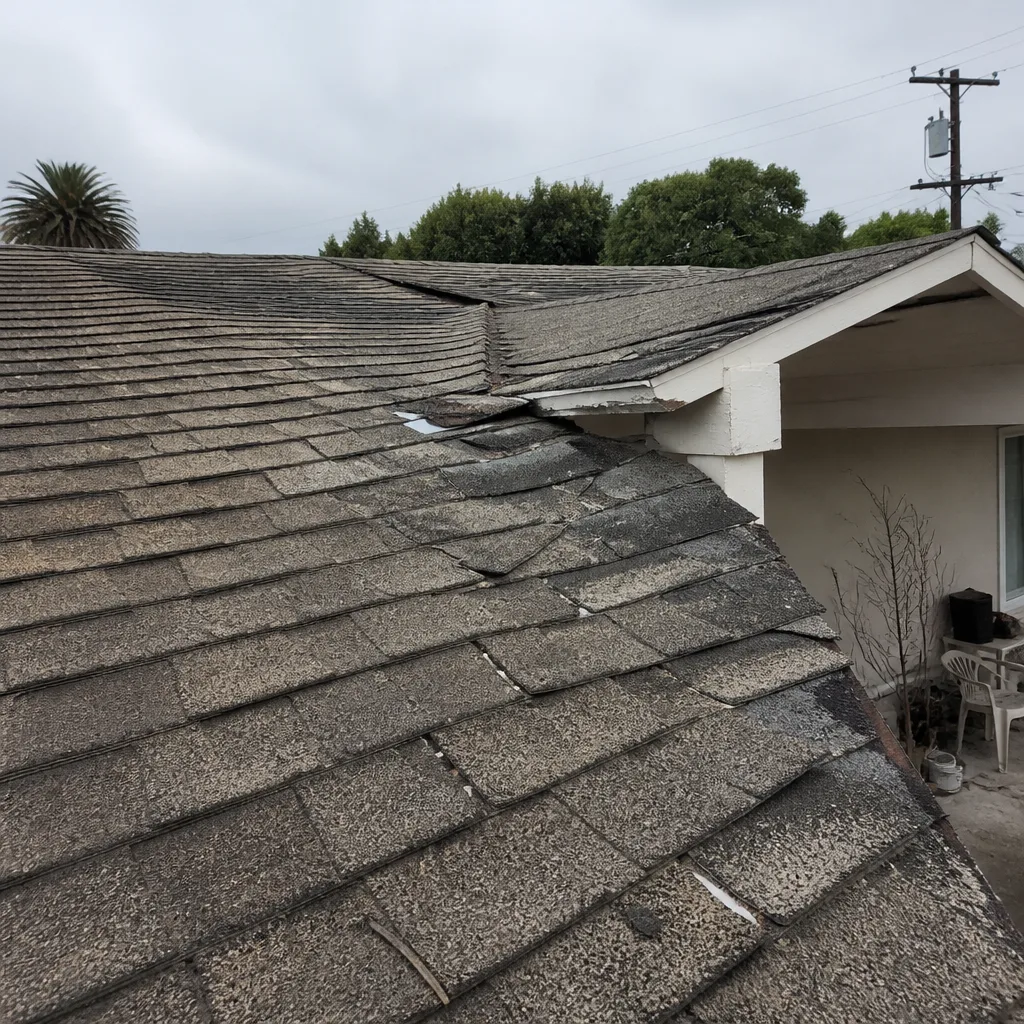 Before
 After
After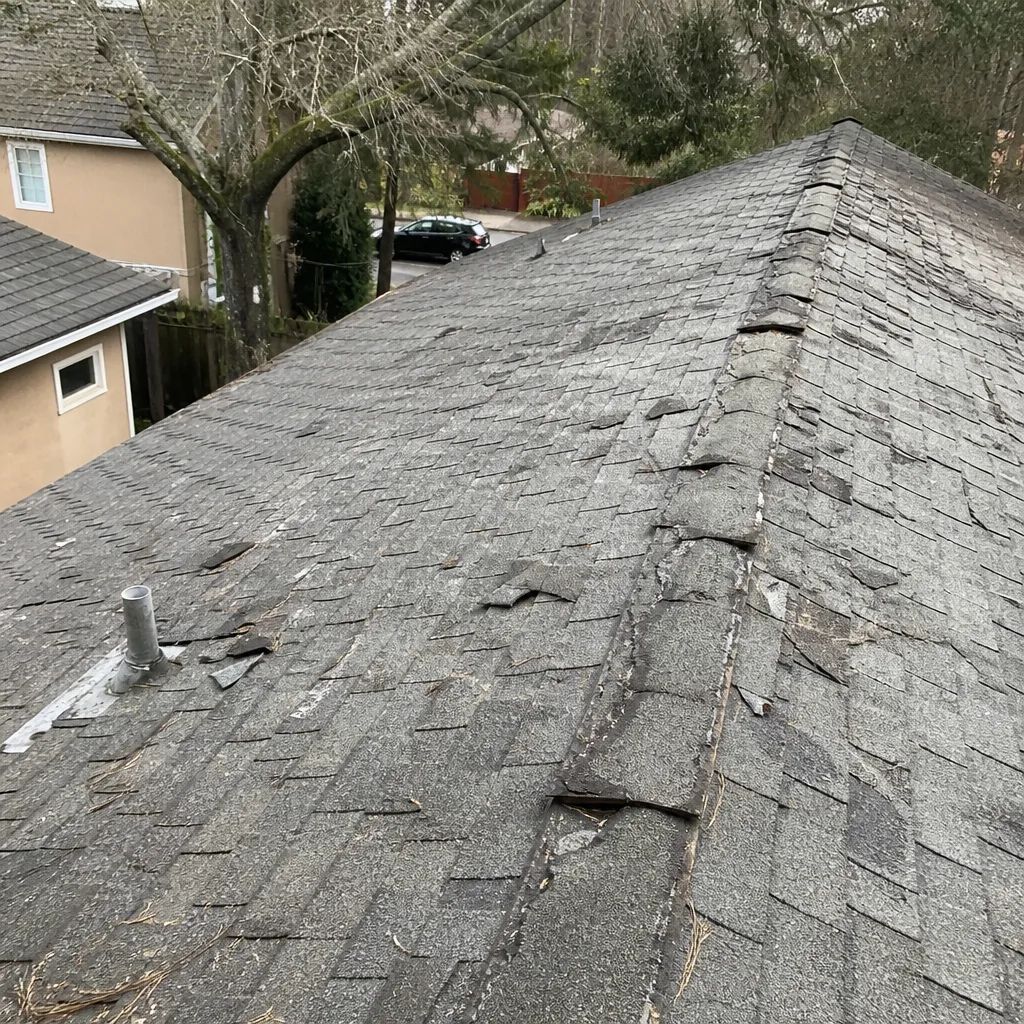 Before
 After
After